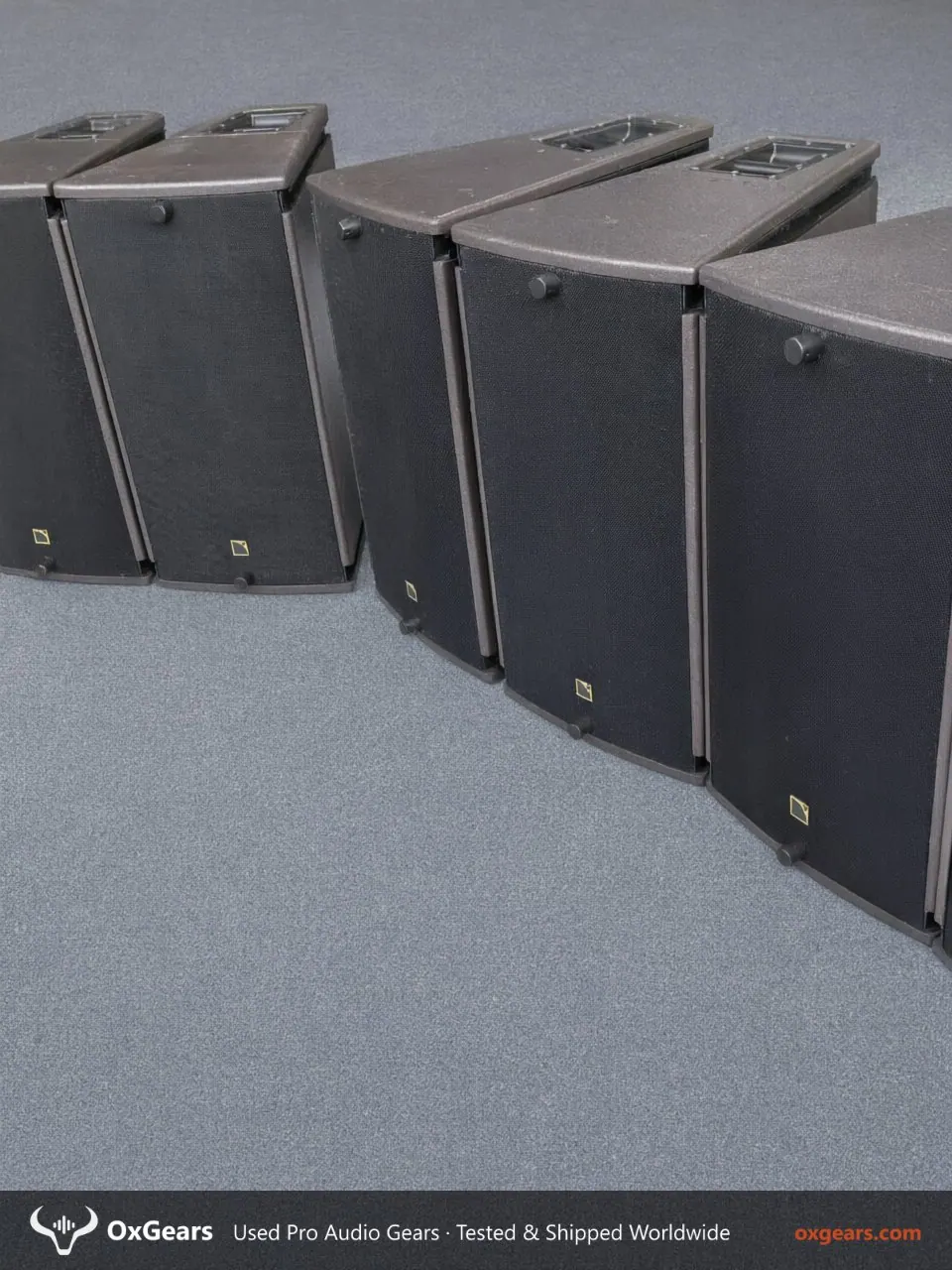
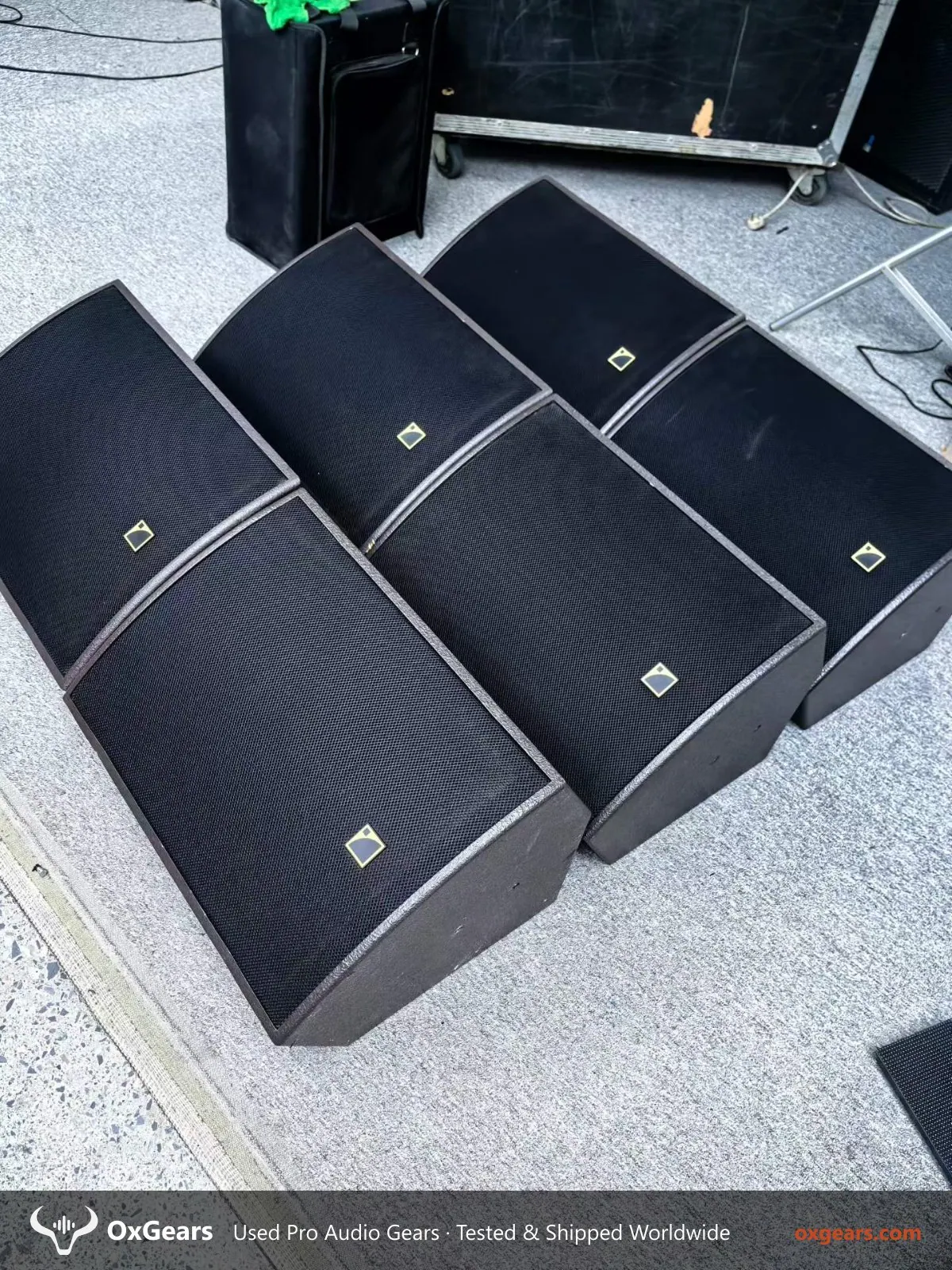
The L-Acoustics ARCS II is a medium-format, two-way speaker that still earns its place in rental inventories and fixed installs because it covers mid-size rooms without a line array hang. If you are sourcing used L-Acoustics ARCS II for sale, the spec sheet is only half the story — the other half is what the cabinets have been through. This guide covers what to verify before you commit, written for overseas distributors, rental companies and venue buyers who need units that go straight into revenue service.
Start with the driver complement and the numbers you can confirm on the bench. Each cabinet carries 2x 10" LF and 2x 1.4" HF drivers, 1200 W AES power handling, a 65 Hz – 20 kHz range and 134 dB peak SPL, with 90° H × 60° V coverage. Nominal impedance is 8 Ω on both LF and HF sections. The connector is 2x NL4 with 1+ = LF+, 1- = LF-, 2+ = HF+, 2- = HF- — confirm this pinout on every unit, because miswired NL4 panels are one of the most common faults on second-hand stock and they will cost you a driver if you patch them blind. Physical dimensions are 720 × 480 × 420 mm at 50 kg / 110.2 lb per box, so plan freight and rigging around that weight rather than assuming a lighter cabinet.
Condition grade A is the practical benchmark for export resale: cabinets that show normal cosmetic wear but no structural damage, original drivers or documented recones, and hardware that still torques down cleanly. Ask for photos of the rigging points, the NL4 panels, the grille and the rear label. On ARCS II boxes, check the HF diaphragm condition and listen for level matching between the two HF sections; a tired diaphragm usually shows up as a channel imbalance before it fails outright. Confirm that the LF cones are original or correctly reconed, and that the cabinet has not been dropped on a corner — corner damage on a 50 kg box often hides internal bracing cracks.
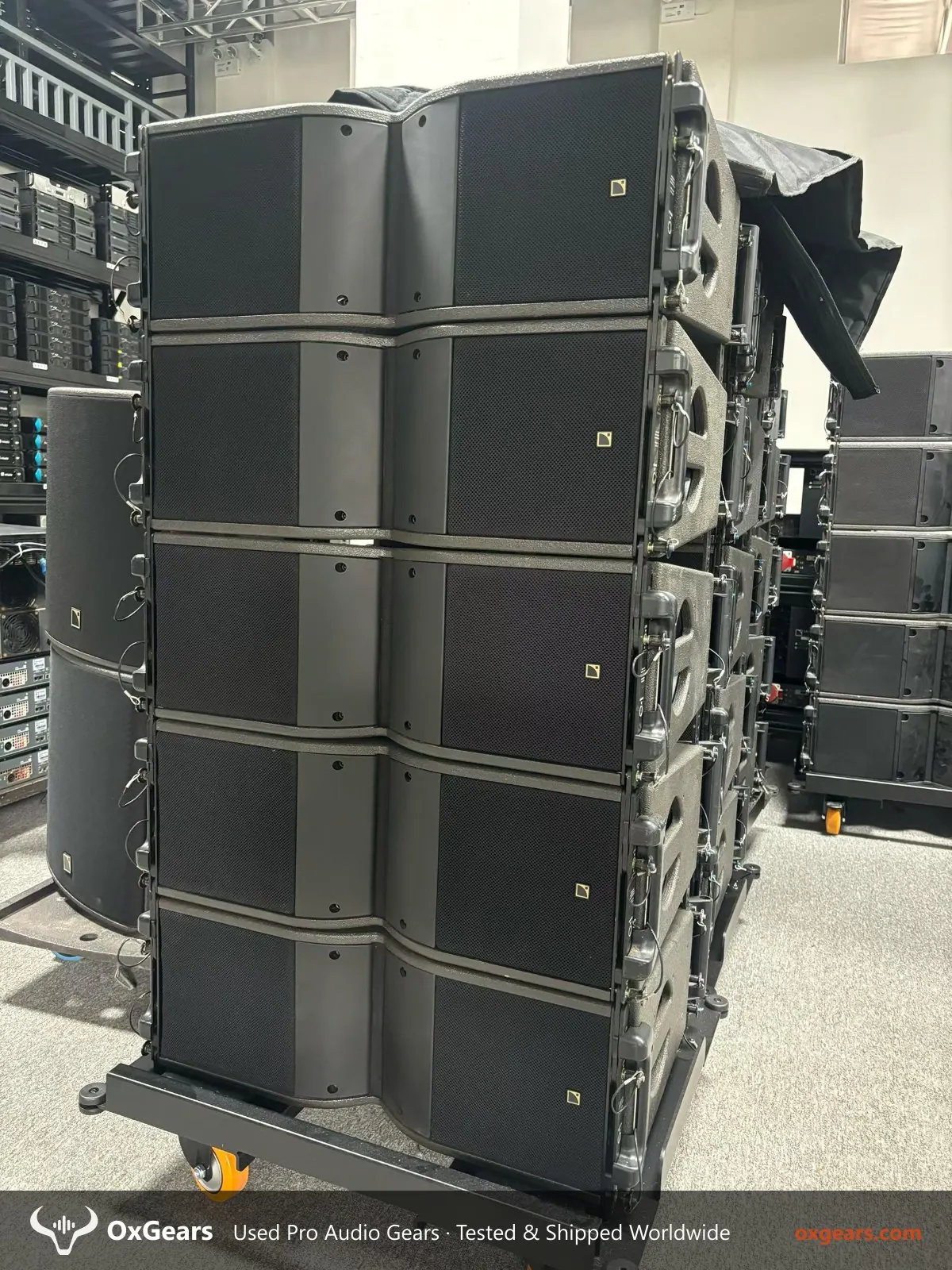
For buyers assembling a system rather than a single pair, it pays to compare formats before you commit. If your rooms need longer throw, review used line array speakers alongside ARCS II stock so you are matching coverage to venue depth rather than buying on price alone. Rental companies running mixed inventories should also read our notes on used pro audio equipment for export to understand packing, palletising and documentation expectations before the container is booked. Venue owners fitting a fixed room should size the ARCS II count against the 90° × 60° pattern and the 65 Hz low-end limit, then decide whether subwoofers are needed for the programme material.
Because year of manufacture and quantity available are confirmed on request rather than published, treat those as questions for the seller, not assumptions. Ask for the manufacturing period, the number of matching cabinets in the batch, and whether they came from a single rental fleet — matched batches matter for resale and for predictable voicing across a room. Request close-ups of serial labels and any service records, and ask whether the units have been tested on a DSP preset for the ARCS II. A short bench test with pink noise and an impedance sweep tells you more about driver health than any cosmetic photo.
Finally, price the whole landed cost, not just the unit price. At 50 kg per cabinet, freight class, pallet dimensions and insurance drive the real number, and grade A stock justifies the premium only if the drivers and rigging hardware are sound. Buyers comparing options across categories can browse the full used pro audio equipment catalogue to see how ARCS II stock sits against other speaker formats. Confirm the NL4 pinout, driver condition, batch matching and documentation in writing before payment — that checklist is what separates a clean export deal from a container of surprises.
Questions about this unit or about shipping to your country? Contact us for condition photos, test results and a quote.