Corporate AV and conference center sound systems for boardrooms and meeting rooms
Boardrooms and conference centers run on speech: even coverage from the front row to the back, microphones that stay clean when the presenter walks the room, and routing that sends one source to the room, the video call and the overflow space at the same time.
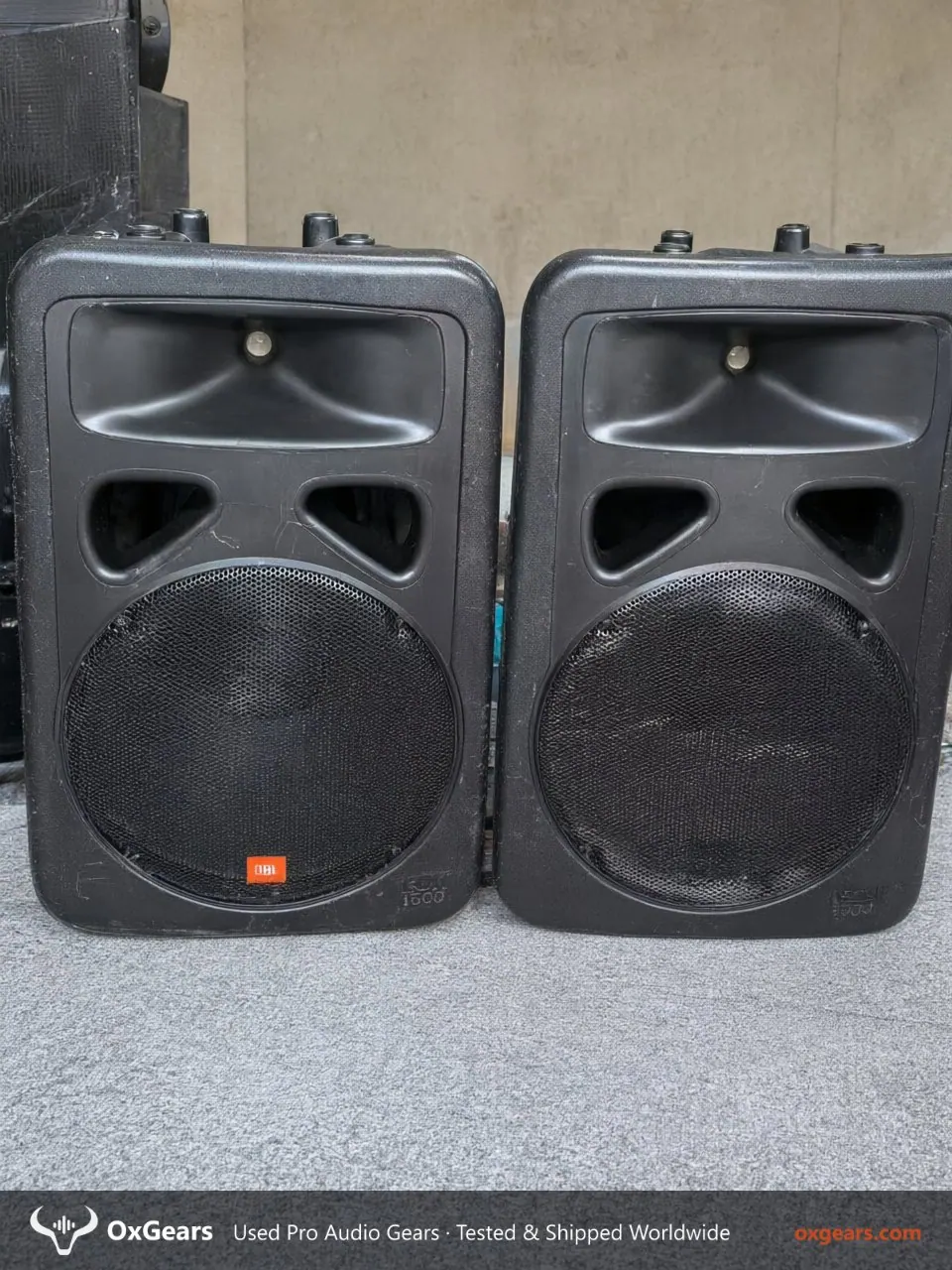
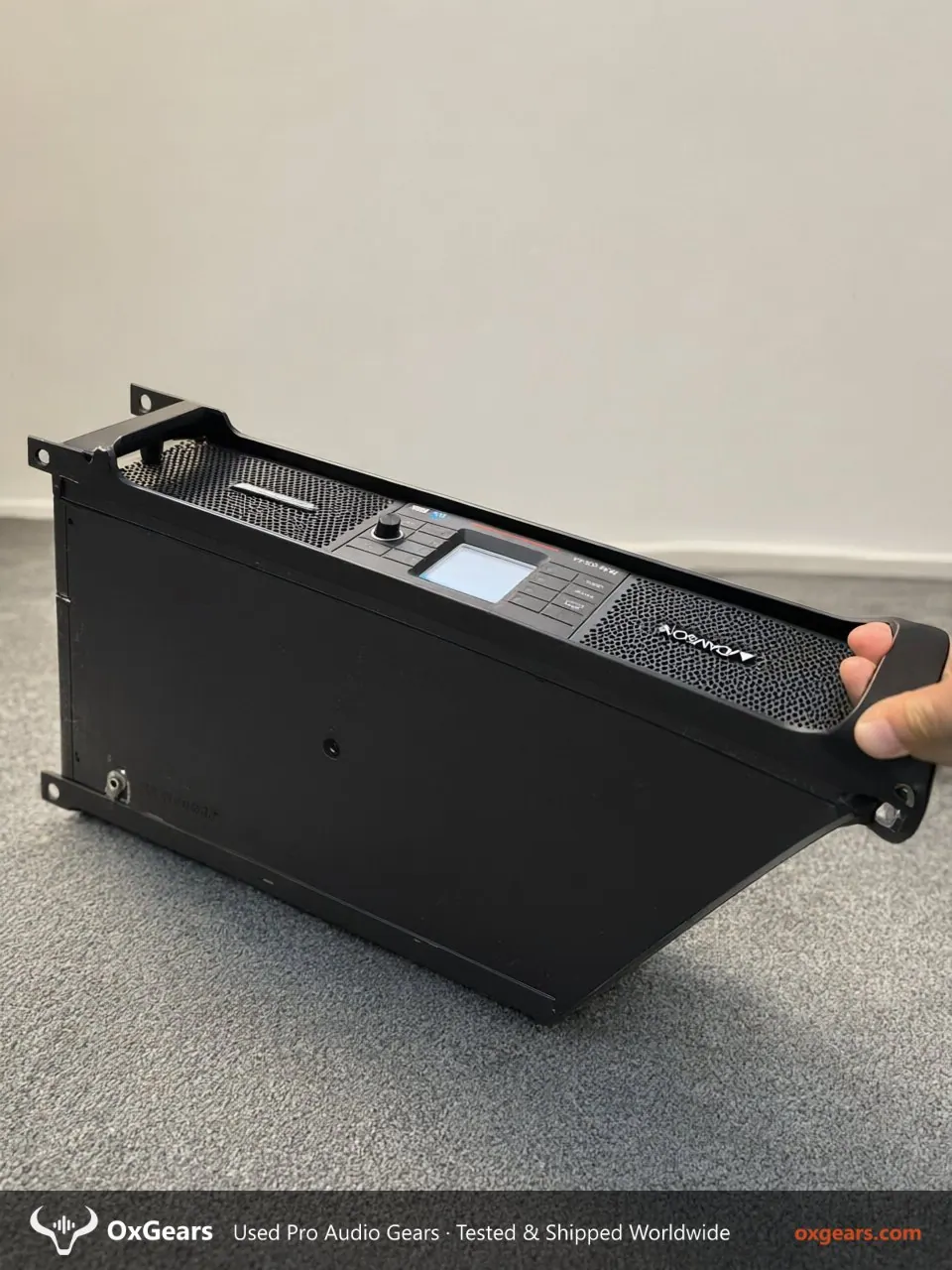
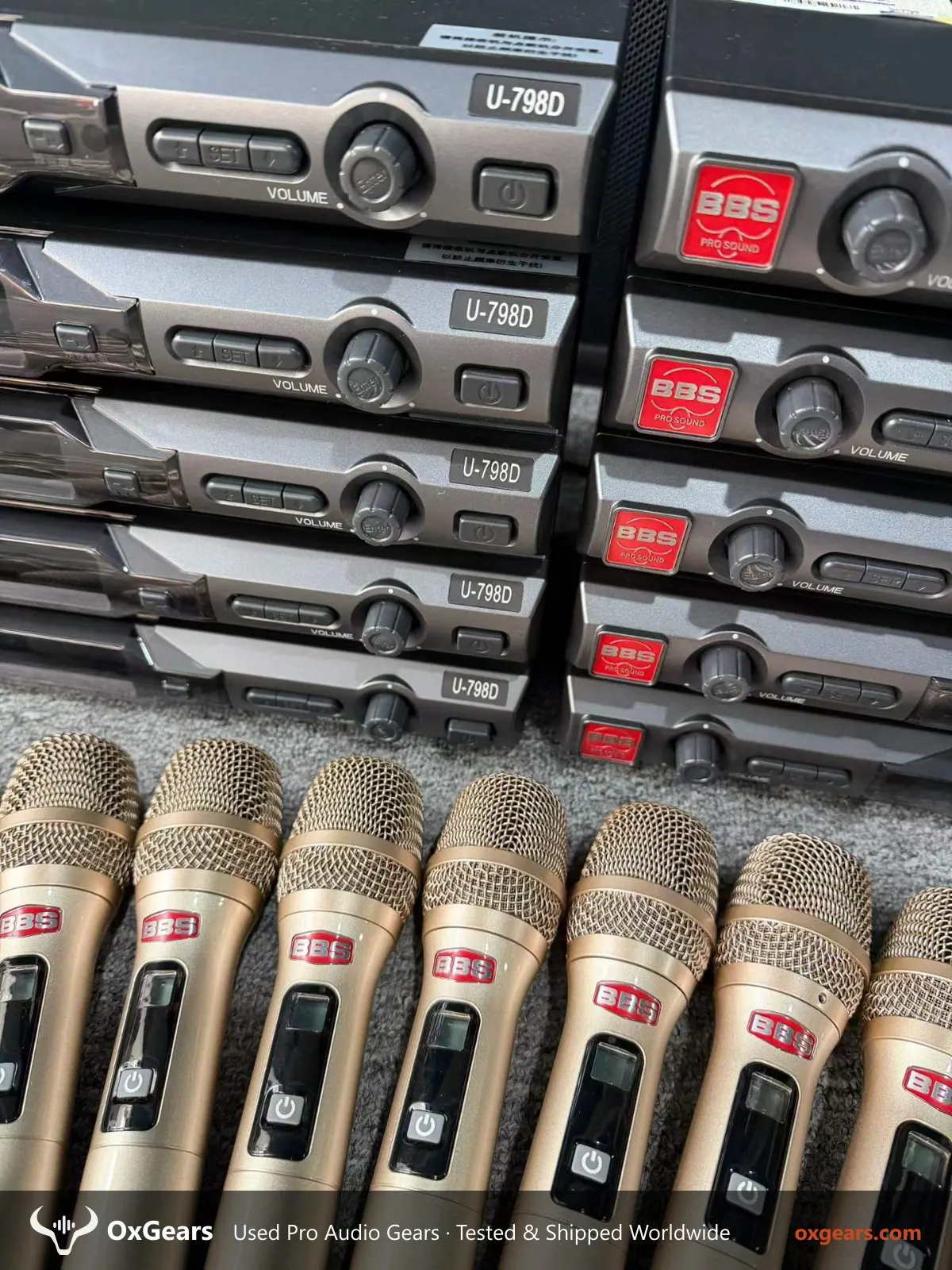
For a 50–150 m² boardroom or conference room we plan 6× JBL EON1500 wall-mounted cabinets, 2× BBS U-798D wireless handhelds, 2× Crown CM-310A lectern mics, one Yamaha MG06 console and one Adamson PLM 20K44 four-channel amplifier with the speech preset locked. The EON1500 is rated 124 dB peak at 225 W (IEC) from 55 Hz–20 kHz, the U-798D wireless set is rated 130 dB peak, and every rack is powered up and checked for mic noise and channel balance in our warehouse before it ships.
A conference room is a speech job before it is a music job. What the audience notices is whether they can hear the person at the far end of the table without leaning forward, and whether the person on the video call hears the same thing.
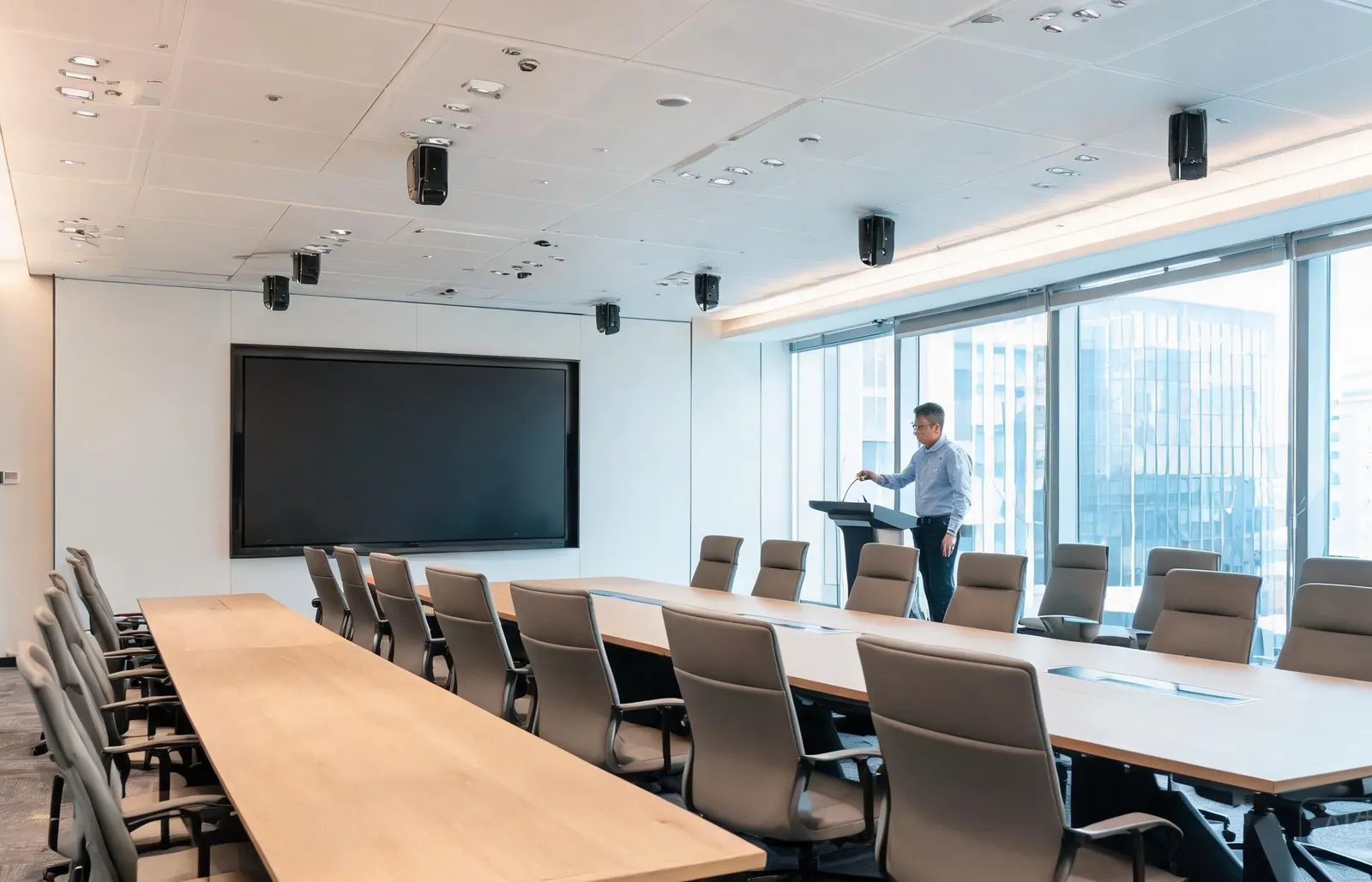
Spread the sound instead of pointing it. Ceiling speakers or small wall-mounted cabinets along the room keep the level even from the front row to the back, and nobody has to walk past a speaker on the way in. Two big boxes on stands at the front do the opposite: loud near the screen, thin at the last row.
Microphones and routing matter more than the loudspeakers here. Two wireless handhelds plus a gooseneck or two at the lectern cover most sessions, and a DSP preset with feedback control keeps a presenter who steps in front of a speaker from starting a howl.
A matrix router is what makes the room usable: the podium mic feeds the in-room PA, the video call and the overflow room at the same time, each with its own level. That is also the part worth buying at full professional grade used — an analogue matrix or a small digital console from a touring system is far more capable than a consumer switcher.
Leave the subwoofer out unless the room doubles as an event space. One compact sub for playback and video content is enough, and it keeps the low end out of the speech band where it only muddies intelligibility.
Installer pain points and how we solve them
The three problems that come up most often in this kind of room — and the specific way we plan around each one.
What goes wrong in the roomHow we plan around it
Remote attendees hear an echo, or the far end drops out mid-sentence.
We keep the cabinets off the microphone axis, set one fixed speech preset in the PLM 20K44 — high-pass filter, a narrow notch on the lectern mic, light compression on the wireless channels — and ship the rack with a printed signal flow drawing that shows which mic feeds the room and which line output feeds the video codec, so the room mix is never sent back into the call. The amplifier's Ethernet port is for local setup and preset recall only; audio stays on copper, so IT does not have to open a network segment for sound.
Staff cannot operate the room, so a silent meeting ends with a call to IT.
Every rack is prewired and labelled in our warehouse: lectern, handheld 1, handheld 2, PC and codec on separate inputs, one master volume, no per-channel controls left exposed. The preset is stored and locked in the amplifier, and a one-page start-up card lists power, source and volume in that order.
Surface-run cable ruins a finished boardroom, and every room ends up specified differently.
We issue a cable schedule and a rack elevation before delivery, so the installer can pull cable before the ceiling closes and the electrician knows where the wall plates land; cabinets go in-ceiling or on brackets with the cable concealed in the wall or ceiling void. The same cabinet, mic and amplifier models are used across the floor, and rooms of the same size get the same preset number — a fault becomes a swap, not a redesign.
Configuration by room size
Starting points by floor area. Tell us your room size and we adjust the list.
≤ 50 m²
Small meeting room
4 ceiling or wall speakers, 1 gooseneck mic, 1 wireless handheld and a small DSP amp.
421
Why this count
Four EON1500 cabinets — two at the front wall, two at the rear at half level — each cover 90° × 60° at 124 dB peak and 225 W IEC, which holds a 70–75 dB speech level across a 50 m² room from the first row to the last with no delay ring. At 8 Ω, one PLM channel can carry a parallel pair at 4 Ω with 2000 W in reserve, so a presenter never pushes the system into clipping.
6 speakers, 2 wireless handhelds, 2 gooseneck mics, a DSP amp and a matrix router for the video call.
6411
Why this count
Six cabinets cover 150 m² in two rows: two parallel pairs at 4 Ω on two amplifier channels (2000 W each) plus two single cabinets at 8 Ω on the remaining channels, so one PLM 20K44 drives the room and still has DSP for all four mics — two BBS handhelds rated 130 dB peak and two CM-310A lectern mics. The 55 Hz–20 kHz range of the EON1500 means no subwoofer is needed for speech and video playback.
12 speakers across two combinable rooms, 4 wireless mics, a digital console, a DSP matrix and video switching.
124111
Why this count
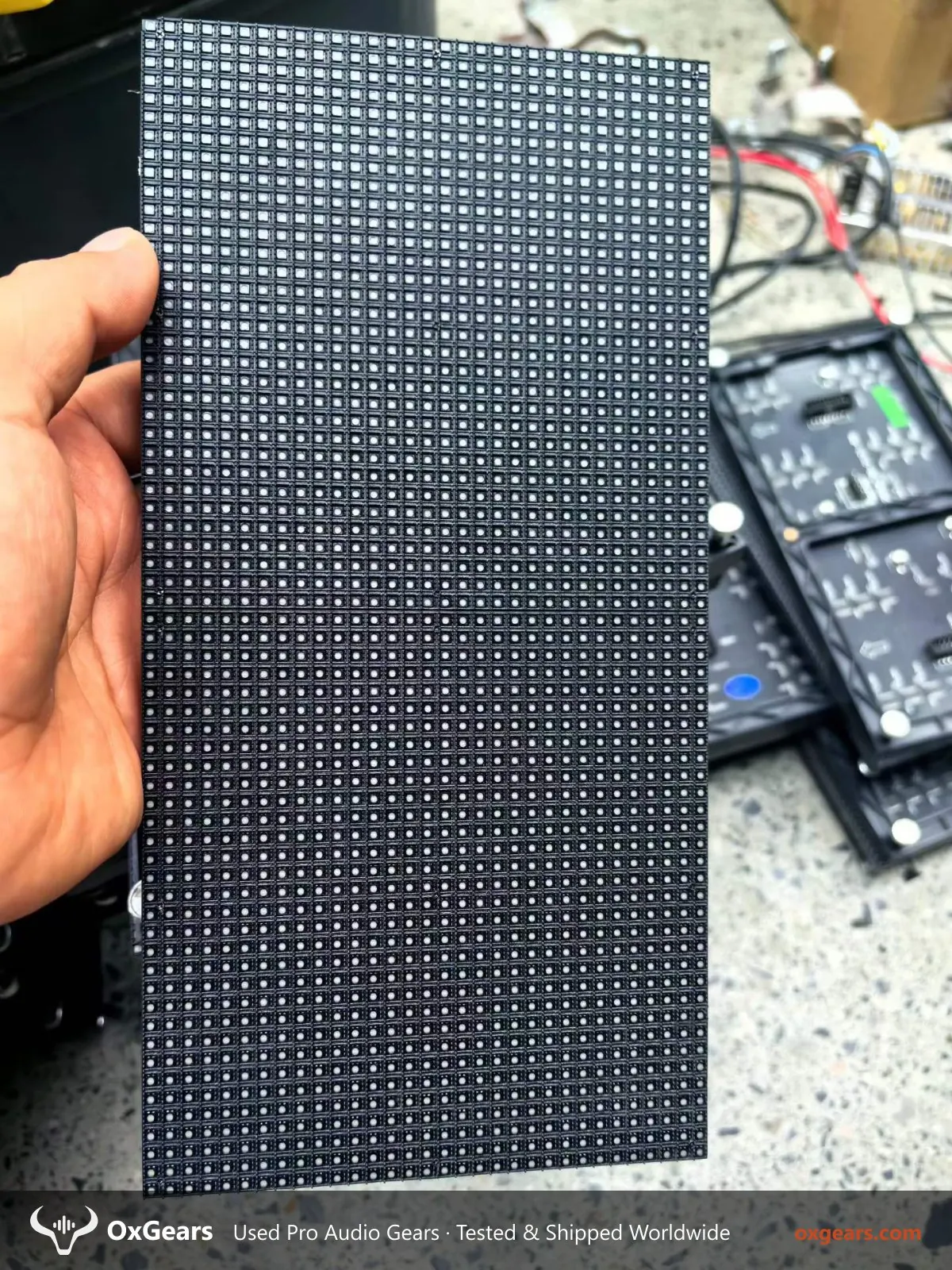
A 150–400 m² divisible hall is planned as two six-cabinet rooms so each half matches the boardroom tier and can be joined without re-patching; a second amplifier of the same model is quoted when both halves run at once. The video wall is 4 modules wide × 3 high of KP4-EF-512 — about 4.9 × 1.85 m at 1024 × 384 px, 4.81 mm pitch, 5500 nits and 5000:1 contrast — bright enough to stay readable with the house lights up.
How many ceiling or wall speakers does a 50-person meeting room need?
For a room up to 50 m² we plan 4 cabinets, and for 50–150 m² we plan 6, spread front and rear rather than aimed from one end. Each EON1500 covers 90° × 60° at 124 dB peak, which puts the same speech level on the last row as the first without turning the front of the room up.
How do you stop echo on video calls in a conference room?
Two things matter: keeping the microphones out of the loudspeaker's direct field, and sending only one controlled mix to the codec. We set and lock a speech preset in the amplifier — high-pass filter, a narrow notch on the lectern mic, compression on the wireless channels — and supply a signal flow drawing so the room mix cannot be routed back into the call. Far-end echo cancellation stays with your video codec.
What condition is your used conference equipment in?
Grade A is 90% or better cosmetic condition with no functional faults; Grade B is fully working with visible wear. Every amplifier, mixer and wireless receiver is powered up and checked for noise, channel balance and mic capsule faults, and the result is recorded against the serial number.
The Yamaha MG06 is a compact 6-channel analog mixing console suitable for small performances, recording, and live streaming. It features 2 microphone inputs (with phantom power), stereo line inputs, and main output/headphone monitoring jacks, with intuitive operation, portability, and durability.
The JBL EON1500 is a 2-way powered stage monitor/main PA speaker, equipped with a 15-inch woofer and a 1.5-inch high-frequency compression driver. Rated power handling is 225W (IEC), system impedance is 8 ohms, suitable for small to medium-sized performances, conferences, and fixed installation scenarios.
The Adamson PLM 20K44 is a professional-grade digital power amplifier, equipped with an LCD display and physical control knobs, and supports network connectivity and AES/EBU digital input. Suitable for driving line array systems, it offers high reliability and on-site tuning capability.
Includes multiple gold-shell BBS U-798D wireless handheld transmitters and matching receivers. The transmitters feature an LCD display and power/channel control buttons; the receivers are 1U rack-mount design with volume knobs, SET buttons, and power switches. Suitable for stage performances, conferences, KTV, and similar scenarios.
Used LED display module, model KP4-EF-512, resolution 256×128 pixels. Suitable for outdoor or indoor LED screen splicing, sturdy structure, tested and working properly.