Used Line Array Speakers for Sale in Nigeria: B2B Buying Guide
Navigate the purchase of used line array speakers in Nigeria with our B2B guide. Learn what to check, what data is missing, and how to avoid pitfalls.
A mixed container works when you decide three things before you ask for availability: the grade floor, the category ratio and the inspection sequence. Everything else — model mix, packing order, paperwork — follows from those three. Without them, a mixed load becomes a box of unrelated units that is hard to resell, hard to service and hard to price.
Plan a mixed container by writing a buying brief first: a minimum grade, a target split across product categories, and a written inspection and photo-report step before the container is sealed. Then ask for availability against that brief rather than browsing single units. The brief is what makes a mixed load resellable, because it forces the supplier to fill categories you can actually sell rather than whatever is on the floor.
1. Set a grade floor in writing and state whether B-grade units are acceptable at all, because the grade mix decides resale value more than the model mix. 2. Fix a category ratio in advance — for example line array, subwoofers, amplifiers and consoles — so the container matches what your own market buys. 3. Require a photo and condition report per unit before sealing, and treat any unit without a report as unverified rather than assumed good. 4. Confirm packing, weights and documentation per consignment, since none of these values are published and all of them affect landed cost.
There is no listing data behind this topic. No model numbers, serial numbers, prices, warranty periods, lead times or MOQ can be cited here, and none should be assumed. Every specific value in a mixed-container plan is Unknown / Not disclosed until it appears in a written quote or a condition report for the actual units. If your market also buys video hardware, a few used LED panel modules can round out the same brief alongside the audio categories you have already fixed.
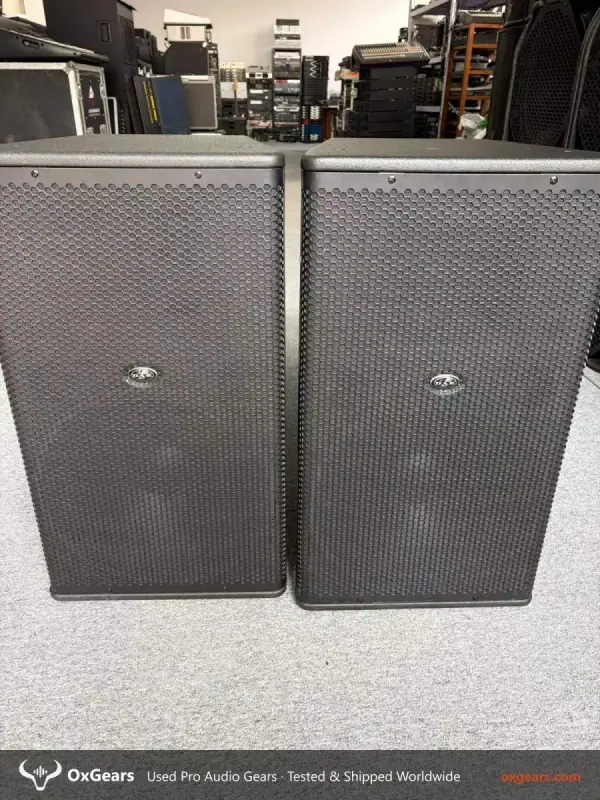
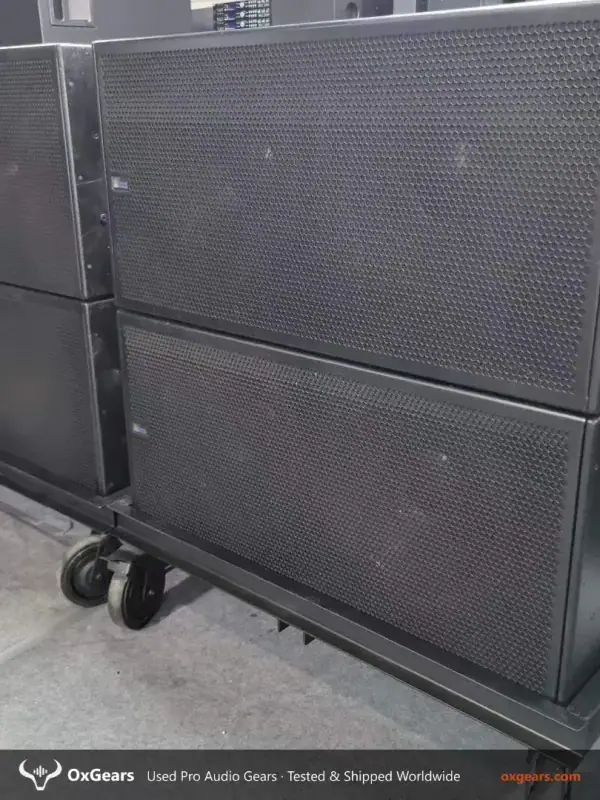
What the materials do support is the product scope. OxGears exports second-hand line arrays, subwoofers, full-range speakers, power amplifiers, mixing consoles, microphones, DJ equipment such as CDJ units, controllers and turntables, and audio processors / DSP. That is the universe from which a mixed container is assembled. The catalogue at used pro audio equipment is the place to see which categories are currently represented, but the catalogue is a starting point for a brief, not a substitute for one.
The practical consequence is that you cannot plan from a spec sheet. You plan from a written requirement you send, and you compare what comes back against that requirement. Buyers who reverse the order — collect units first, then try to justify the container — usually end up with a load weighted toward whatever was easiest to source. For distributors whose end customers stage outdoor events, a festival sound system package is the kind of project where a spread load of cabinets and amplifiers pays off.
A datasheet describes one product. A mixed container is a portfolio, and the portfolio properties are the ones that decide whether the load sells.
The first missing property is the grade distribution. A container of mostly A-grade units and a container of mostly B-grade units can carry the same category mix and behave completely differently in your warehouse. Grade is a condition judgement, and the site explains how it is applied in how used professional audio is graded. Ask for the grade split as a number, not as an adjective.
The second missing property is serviceability across the mix. A mixed load spreads your spare-parts and technician attention across several brands and families at once. Two amplifier families and three console families in one container means three sets of documentation and three sets of consumables to hold. A single-family load is narrower but cheaper to support. Neither is wrong; the point is that the choice is invisible on any product page.
The third missing property is packing and loading behaviour. Cabinets, amplifiers and consoles do not share a packing profile. How a mixed load is sequenced inside the container — heavy cabinets low and central, electronics protected from cabinet hardware, accessories boxed separately — is a loading decision that affects damage rates. The site covers freight mechanics in shipping used audio equipment, but the specific weights, dimensions and pallet counts for your consignment are Unknown / Not disclosed until quoted.
The fourth is documentation per unit. Serial numbers, service history and any test record are unit-level facts. For a mixed container, the useful format is a line-per-unit schedule that travels with the load, so your receiving team can check the container against the schedule rather than against memory.
Do not plan a mixed container if you cannot inspect, or cannot pay someone competent to inspect, before the container is sealed. A mixed load concentrates risk: one bad lot of amplifiers or one batch of cabinets with tired drivers is a larger share of the total value than it would be in a single-category purchase, and it is harder to argue about after the fact.
Do not choose it if your business sells one thing. A rental company standardising on one console family, or a venue operator buying only line array, gets little from category spread and pays for it in support complexity. Single-category buying is the better fit there.
Do not choose it if you have no storage for mixed SKUs. A mixed container arrives as many small inventories, not one big one, and each needs a location, a label and a count.
And do not choose it if you need a firm answer on price, warranty, lead time or MOQ today. Those values are Unknown / Not disclosed for this topic, and a plan built on assumed numbers is a plan that fails at the deposit stage.
Spread against depth. A mixed container lets you test several categories in your market at once, which is useful for a distributor still learning what sells. The cost is that no single category arrives in enough depth to fill a project. If one of your customers needs eight matched subs, a spread load may not cover it.
Grade floor against fill rate. A high grade floor protects resale value but narrows what can be sourced, so the container takes longer to complete or ships partly filled. A lower floor fills faster and shifts the work to your own refurbishment bench. Decide which resource you have more of: time or technician hours.
Brand consistency against availability. Insisting on one brand family across the load simplifies support and resale storytelling, but it constrains what can be assembled. A brand-agnostic brief fills faster and sells on category and grade rather than on brand.
Inspection depth against cost. Per-unit photo reports and functional checks on every item cost money and time before shipping. Sampling is cheaper but leaves unverified units in the load. For high-value categories such as consoles and DSP, per-unit reporting is usually the better trade; for accessories and low-value items, sampling is defensible.
New against used. Second-hand gear buys more units per container, which is the whole point of the exercise, but it moves the risk from the supplier's warranty to your inspection process. That trade is only worth taking if the inspection process actually exists.
Write the brief. One page: grade floor, category ratio with target unit counts, the categories you will not accept, the inspection and reporting format you require, and the documentation you expect to travel with the load. Keep model numbers out of it unless you have a specific project to fill; a brief that names models turns into a shopping list and loses the portfolio logic.
Then send it and ask for availability against it. Use contact to start that conversation and state plainly which values you need quoted rather than assumed — price, lead time, MOQ, packing data and warranty position are all Unknown / Not disclosed here and must come from the quote itself.
Before paying, do three checks. First, confirm the grade split in writing and confirm that units below your floor are excluded, not substituted. Second, confirm the inspection step happens before sealing and that you receive the report before the balance is due. Third, confirm the unit schedule matches the container, so receiving is a comparison rather than an investigation.
If any of those three cannot be confirmed, reduce the scope: buy a single category instead, prove the process on a smaller load, and scale to a mixed container once the inspection and receiving workflow is proven.
A grade floor, a category ratio with target unit counts, the categories you will not accept, the inspection and reporting format you require, and the documentation you expect with the load. Model numbers are optional and only useful when you have a specific project to fill.
Those values are Unknown / Not disclosed for this topic and are not published. They have to come from a written quote against your brief, not from an assumption.
Line arrays, subwoofers, full-range speakers, power amplifiers, mixing consoles, microphones, DJ equipment such as CDJ units, controllers and turntables, and audio processors / DSP.
Ask for the grade split as a number rather than an adjective, and state whether B-grade units are acceptable at all. Grade distribution affects resale value more than the model mix does.
Require a per-unit condition and photo report before the container is sealed, and make receipt of that report a condition of the balance payment. If that cannot be arranged, buy a single category instead of a mixed load. ## Sources
OxGears used pro audio equipment — /products/
OxGears contact — /contact/
No model-specific specifications are cited in this article; all model numbers, serial numbers, prices, warranty periods, lead times and MOQ are Unknown / Not disclosed.
Shipping several units or building a full system? Check shipping options with your port and timeline.
Navigate the purchase of used line array speakers in Nigeria with our B2B guide. Learn what to check, what data is missing, and how to avoid pitfalls.
How overseas distributors and rental companies should evaluate used line array speakers for sale in South Africa: grading, driver checks, rigging history and export steps.
A process guide for overseas distributors, rental companies, and venue buyers on how to evaluate and purchase used line arrays without model-specific data.