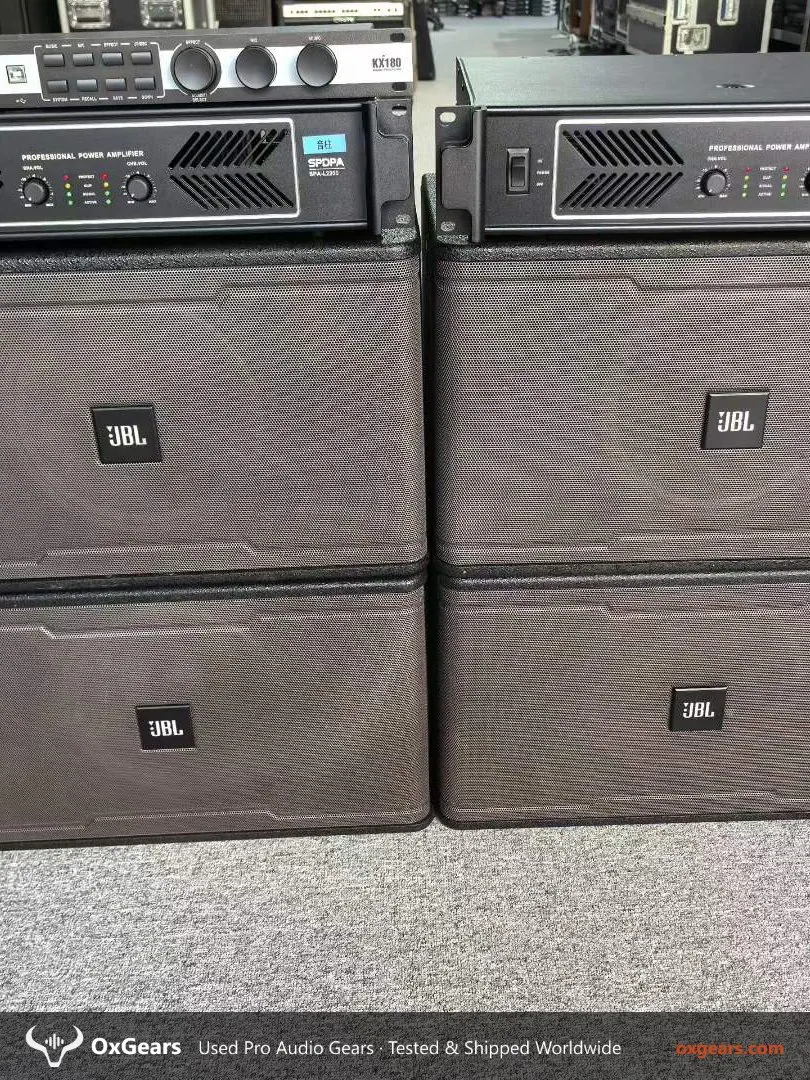
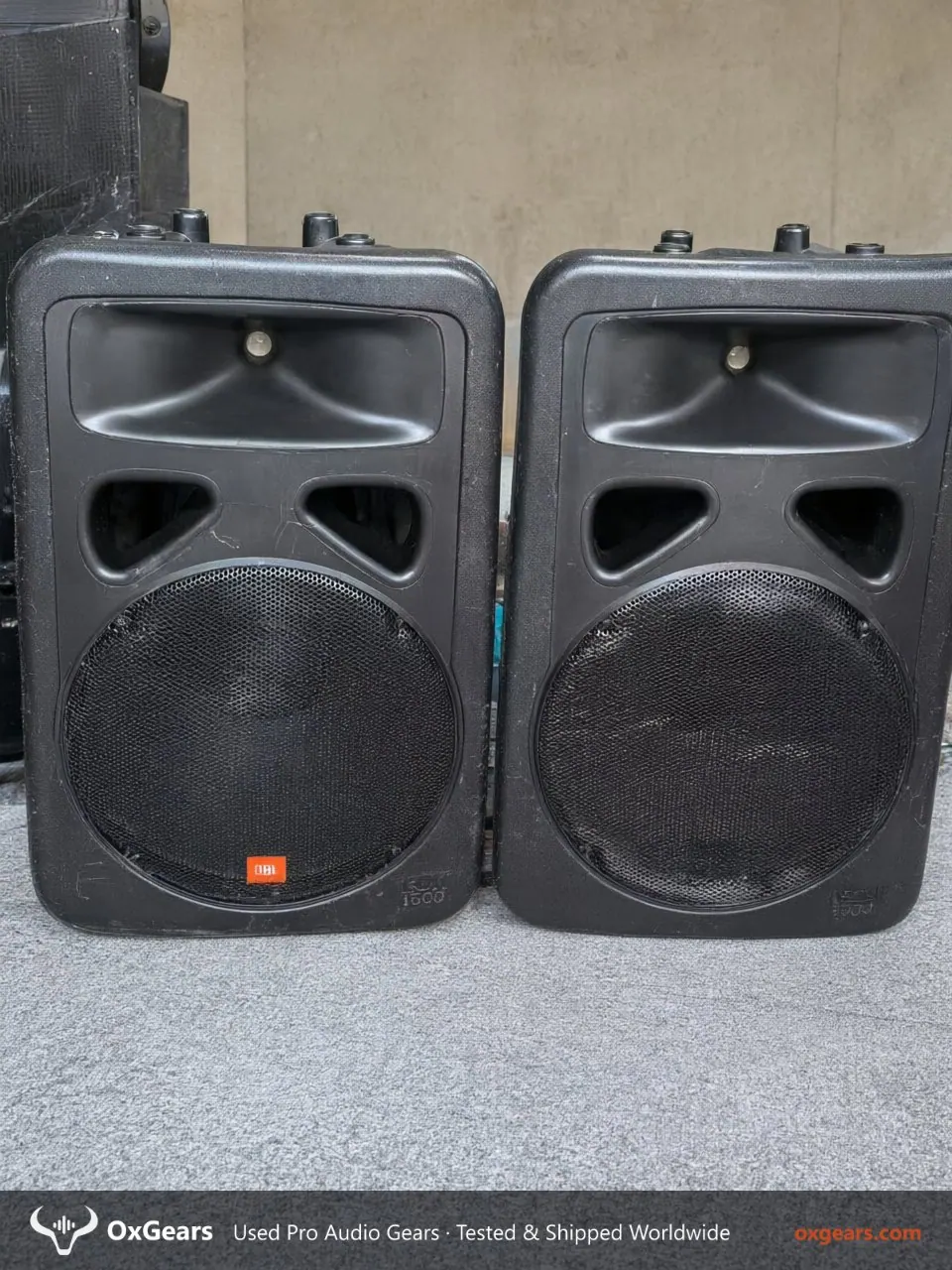
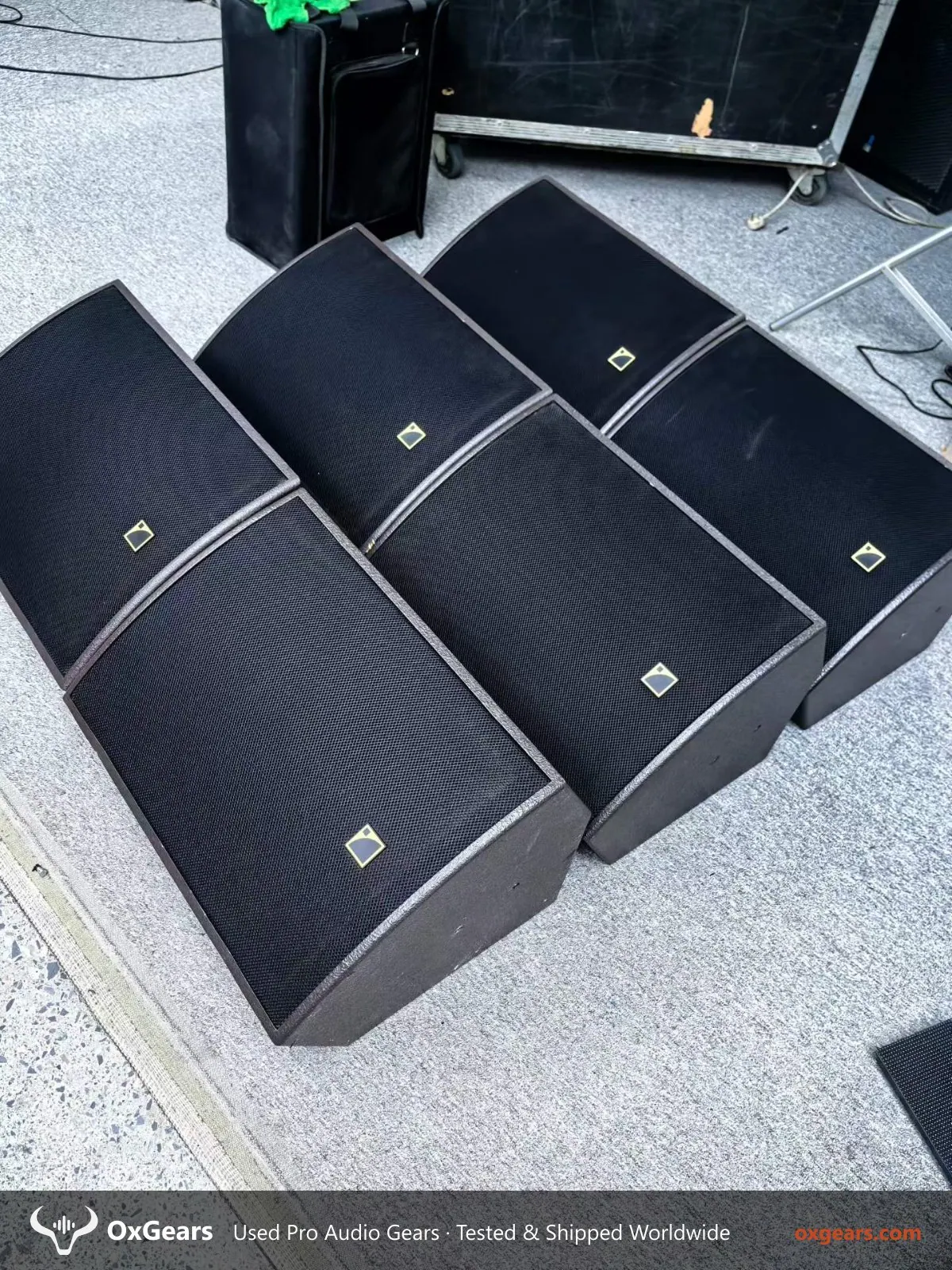
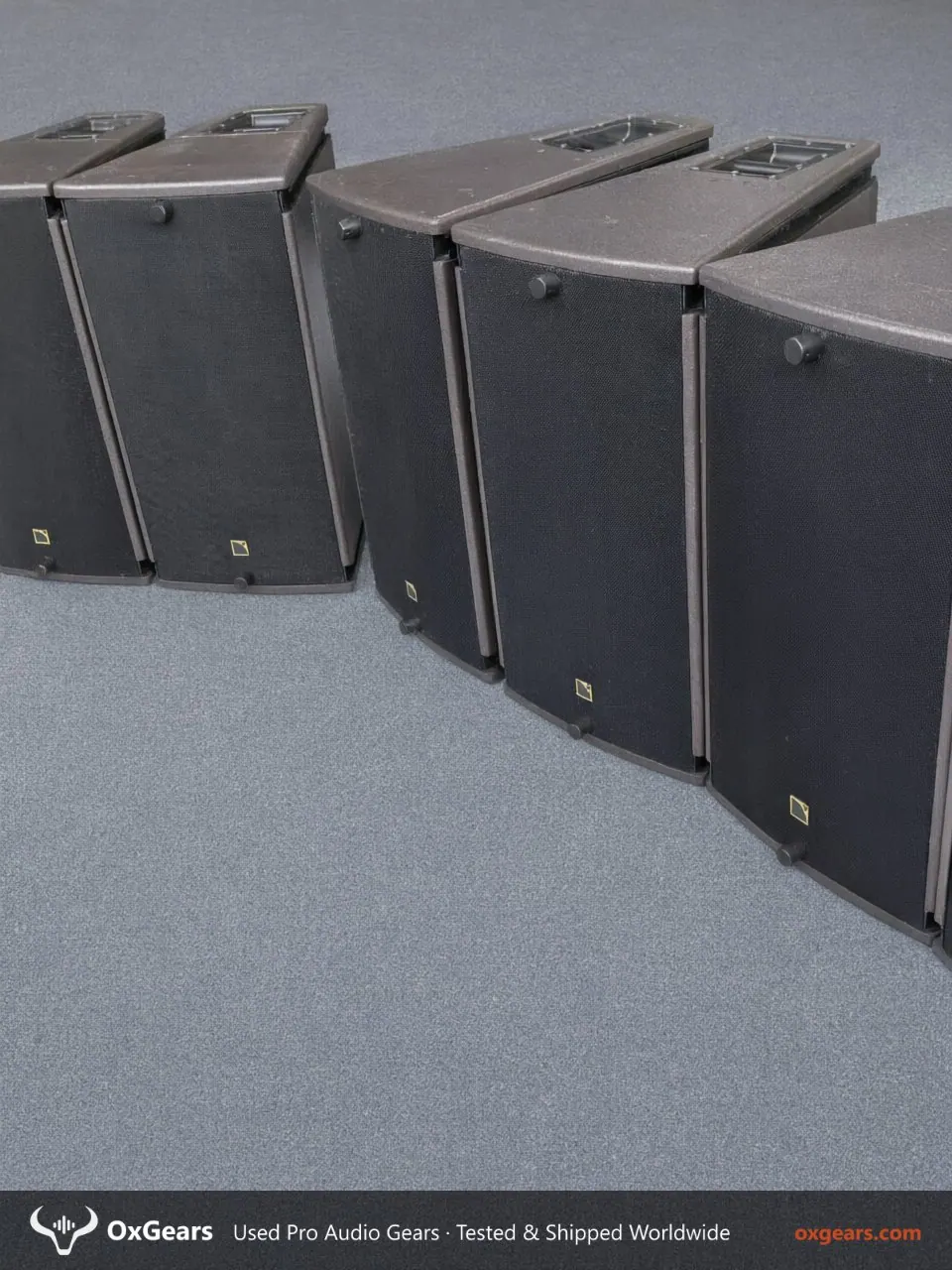
The JBL KM310LE is a compact two-way passive speaker built around a 10" LF driver and a 1.5" HF compression driver, rated at 200W with a 52Hz–18kHz frequency range and a maximum SPL of 126 dB. Its 90° × 60° coverage pattern and 8Ω impedance make it a flexible fill or monitor option for rental inventories and installed systems. If you are sourcing used JBL KM310LE for sale, the four units currently available in Grade A condition are worth a close look, but the checks below matter more than the spec sheet.
Start with the drivers. Ask for close-up photos of both the LF cone and the HF diaphragm, and confirm there is no voice coil rub when the cone is gently pressed. On a used JBL KM310LE, the HF driver is the part most likely to have been overdriven, so request a sweep test or impedance curve if the seller can provide one. The Speakon (NL4) connector and binding posts should be inspected for corrosion or loose terminals, since these cabinets often travel between venues.
Cabinet condition tells you how the unit was treated. Grade A should mean intact grille, no deep gouges, and original hardware. Check the port and grille for dust or foam residue, look for water staining around the joints, and confirm the handles and mounting points are solid. At 18.6 kg and 549 × 320 × 320 mm, the KM310LE is easy to handle, but that also means it gets moved often — so ask about flight case history and whether the units were racked or pole-mounted.
For distributors building export orders, request a consistent batch: matching cosmetic grade, tested drivers, and a clear statement of what was replaced. Buyers comparing this model against larger inventory should also review used pro audio equipment for export to see how the KM310LE fits alongside line arrays and subwoofers in a mixed container. Rental companies often pair these cabinets with used line array speakers for delay and fill duties, so confirm the coverage and impedance match your existing amplifier/DSP presets.
Venue owners and system integrators should think about deployment before purchase. The 90° × 60° pattern suits front fills, under-balcony coverage, and small stage monitoring. If you are specifying a fixed install, check our venue audio solutions for guidance on mixing passive speakers with DSP and amplification. Ask the seller for the year of manufacture on request and confirm whether the units have been re-coned or had diaphragms replaced.
Finally, treat the Grade A rating as a starting point, not a guarantee. Request individual photos of all four units, a short video of each playing at moderate level, and confirmation that the Speakon and binding post inputs both work. For cross-model comparisons and condition-grading standards, read our used speaker buying guide before you commit. With four units available, this is a small lot — clarify whether you can order a partial quantity and how the cabinets will be packed for sea freight.
Questions about this unit or about shipping to your country? Contact us for condition photos, test results and a quote.