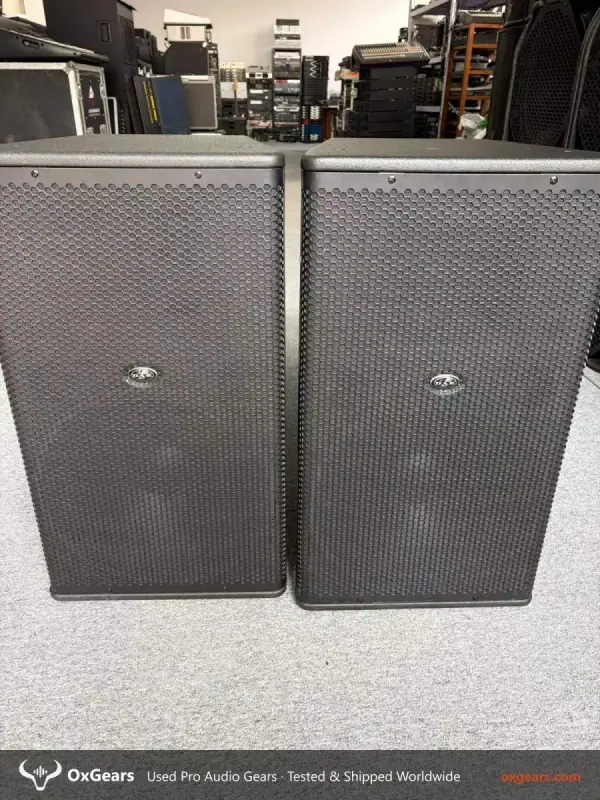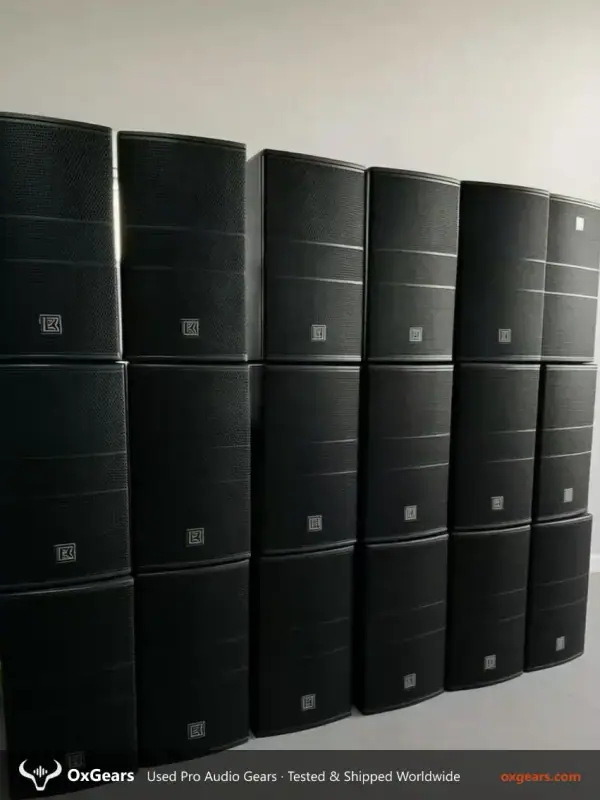
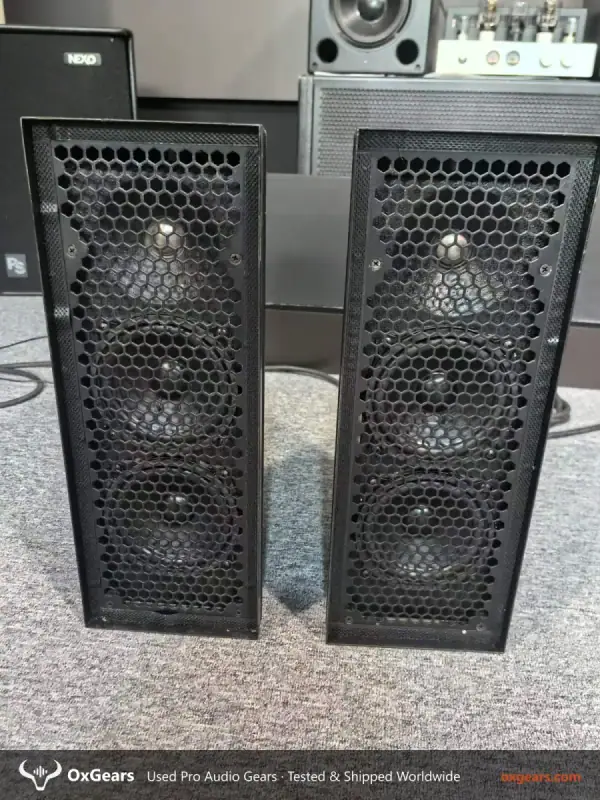
Used Line Array Speakers for Sale in Nigeria: B2B Buying Guide
Navigate the purchase of used line array speakers in Nigeria with our B2B guide. Learn what to check, what data is missing, and how to avoid pitfalls.
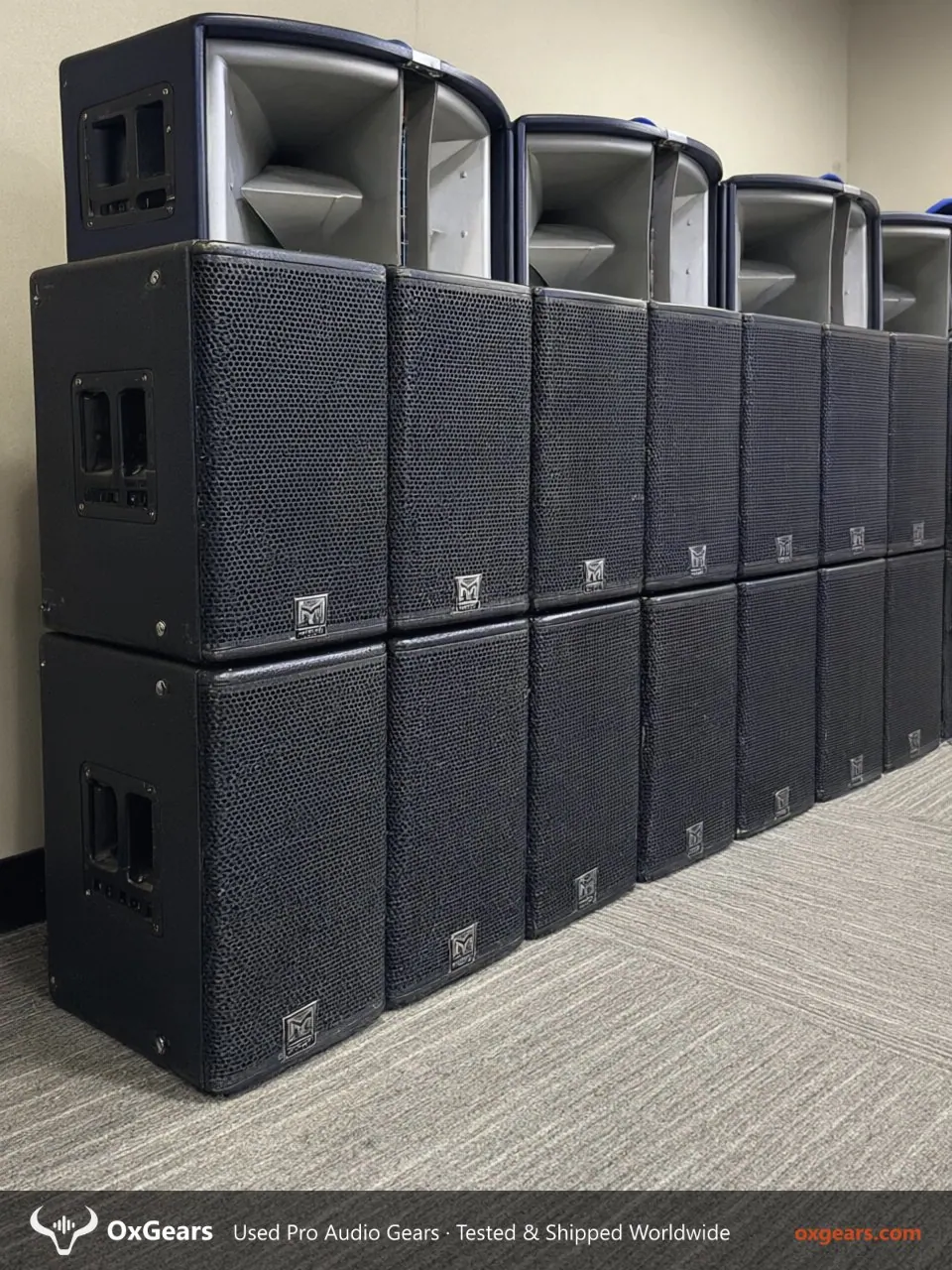
Buying used line array speakers wholesale means buying a matched system, not a pile of cabinets, so the decision rests on driver history, rigging integrity and whether the processing and amplification ecosystem travels with the boxes. Ask OxGears for current availability and condition notes on the specific array you need, then verify the items below before any payment.
1. A line array only performs as an array, so matching cabinet revision, driver complement and processing presets across the whole lot matters more than any single cabinet's cosmetic grade. 2. Rigging hardware, flying frames and link bars are the first thing to confirm in writing, because missing rigging turns a cheap lot into an unusable one. 3. Wholesale lots usually arrive without documented driver history, so budget for re-cone or driver replacement on a percentage of boxes rather than assuming all are healthy. 4. Condition grade tells you about cosmetics and function, not about how many hours a cabinet has flown, so grade alone cannot price a lot.
There is no listing data for this topic in the materials available, so nothing model-specific can be quoted here. No cabinet counts, no driver part numbers, no serial ranges, no prices, no minimum order quantities and no lead times are disclosed. That is not a gap in the writing; it is the honest state of the record, and it should shape how you enquire.
What the materials do support is a category view. OxGears exports second-hand professional audio, and line arrays sit alongside subwoofers, full-range speakers, power amplifiers, mixing consoles, microphones, DJ equipment and audio processors in the same export operation. That matters for wholesale buyers because a line array purchase is rarely standalone: rental companies typically need the matching subwoofer, the amplifier or powered module, and the DSP presets that make the array behave predictably. Buying the cabinets from one source and chasing the rest elsewhere is where wholesale deals usually go wrong.
Start from the second hand line array speakers range to see what category stock looks like, and treat the full used equipment catalogue as the place to check whether the supporting amplification and processing exist in the same export window. If you need a single-vendor conversation across categories, the pro audio department is the right entry point rather than a per-item enquiry.
The manufacturer datasheet describes a new cabinet leaving a factory. It says nothing about the unit you are being offered. Four things it will not tell you, and which decide whether a wholesale lot is worth taking:
First, driver history. A line array cabinet can look clean and still have had drivers replaced with non-original parts, or re-coned with cones that do not match the rest of the array. In a coupled array, one mismatched driver changes the behaviour of the boxes next to it. Ask what is known about driver originality per cabinet and expect the answer to be partial.
Second, rigging. Flying frames, link bars, quick-release pins and angle-setting hardware are separate line items in most wholesale deals. A lot of twelve cabinets with two frames is a different product from a lot of twelve cabinets with six frames. Load certification and inspection records are Unknown / Not disclosed and you should not assume they exist.
Third, processing. Line arrays depend on presets and, in many designs, on amplifier platform matching. If the presets or the correct amplifier model are not available, the array becomes a generic box array and loses the coverage control you are paying for. Whether presets travel with the lot is Unknown / Not disclosed.
Fourth, revision mixing. Wholesale lots are often assembled from multiple sources. Cabinets that look identical can be different revisions with different drivers or horn parts. Ask for a per-cabinet photo set showing the label plate, and read the grading article on how used professional audio is graded A, B and C before you accept a grade at face value.
Do not choose wholesale used line array if you cannot inspect, or cannot appoint someone to inspect on your behalf before shipment. A wholesale lot is priced for the risk you carry, and that risk is only manageable if someone opens the boxes, checks driver part numbers, counts rigging hardware and confirms the cabinets are the same revision.
Do not choose it if your deployment requires certified rigging documentation as a condition of use. Nothing in the materials indicates that load-test certificates, suspension inspection records or traceable rigging histories accompany these lots, and those items are Unknown / Not disclosed. If a venue's insurer or a local authority demands that paperwork, a wholesale used lot is a bad fit and a new or documented system is the correct route.
Do not choose it if you are a venue owner buying one system for one room. The economics of wholesale only work when the buyer can absorb a mixed lot, hold spares and match cabinets over time. A single-room buyer needs a complete, matched, working system with support, not a wholesale lot.
Do not choose it if you need fixed lead times and firm MOQ commitments to plan a tour or a season. Those values are Unknown / Not disclosed here and must be established per enquiry, so any plan that depends on a guaranteed date is premature.
Matched lot versus cheap lot. A smaller, verified, single-revision lot costs more per cabinet than a large mixed lot but removes the matching work. For a rental company, matching labour is real cost, and it lands on your bench, not the seller's.
Cabinets versus ecosystem. Buying cabinets alone is cheaper up front and more expensive later if the correct amplifier platform and presets are hard to find. Weigh the cabinet price against the cost of assembling the full signal chain, including DSP.
Cosmetic grade versus mechanical condition. A Grade A cabinet with unknown driver history is a worse rental asset than a Grade B cabinet with original drivers and complete rigging. Grade is a starting filter, not a valuation.
Volume versus spares. A wholesale lot large enough to cover peak demand also gives you a spares pool. A lot sized exactly to demand leaves you with no donor cabinets when a driver fails mid-season.
Speed versus verification. The fastest wholesale purchase is the one with the least documentation. Every verification step you add costs time, and the trade is deliberate: you are buying certainty with schedule.
Write a short verification request and send it as one message rather than a series of questions. Ask for: per-cabinet photos including label plates; the number of flying frames, link bars and pins included; what is known about driver originality and any re-cone history; whether amplifier modules or matching amplifiers are available in the same lot; whether DSP presets are obtainable; and the condition grade assigned to each cabinet with the basis for that grade.
Then ask for the commercial terms in writing: unit price basis, MOQ, lead time and warranty position. All of these are Unknown / Not disclosed in the materials, so none should be assumed, and any figure you are given should be confirmed on the quotation rather than in conversation.
Before payment, decide your inspection route. Either inspect in person, appoint a third-party inspector, or agree a documented photo and video protocol that covers driver part numbers, rigging thread condition and a functional sweep of each cabinet. Agree in advance what happens if a percentage of cabinets fail that check.
Finally, plan the shipping and import side early, because used audio freight, port handling and paperwork carry their own cost and timing. The existing guide on shipping used audio equipment covers costs, ports and paperwork and should be read before you commit to a delivery term.
When your specification is clear, send it through the request a wholesale availability quote channel with cabinet count, model family and destination port, and ask for availability against that specification rather than a general price list.
Matching depends on what is in stock at the time of enquiry. Cabinet count, revision consistency and included rigging are Unknown / Not disclosed until you specify your requirement and receive availability.
This is not disclosed in the materials. Ask explicitly for the count of frames, link bars and pins included in the lot, and treat any lot without confirmed rigging as incomplete.
Warranty terms are Unknown / Not disclosed and must be confirmed on the quotation. Do not assume any warranty period applies.
Both are Unknown / Not disclosed in the materials. They must be established per enquiry and confirmed in writing before you plan a season or a tour around a delivery date.
The materials confirm that power amplifiers and audio processors / DSP are part of the OxGears export range, but availability alongside a specific line array lot is Unknown / Not disclosed and should be asked as part of the same enquiry. ## Sources
Speakers category — /pro-audio/speakers/
Full used equipment catalogue — /products/
Pro audio department — /pro-audio/
Availability and quote request — /contact/
No model-specific manufacturer specifications apply to this article; no listing data was available for this topic.
Navigate the purchase of used line array speakers in Nigeria with our B2B guide. Learn what to check, what data is missing, and how to avoid pitfalls.
How overseas distributors and rental companies should evaluate used line array speakers for sale in South Africa: grading, driver checks, rigging history and export steps.
How distributors, rental companies and venue buyers should structure a bulk order of used PA speakers: matching, grading, inspection and the questions to ask first.