Quick answer
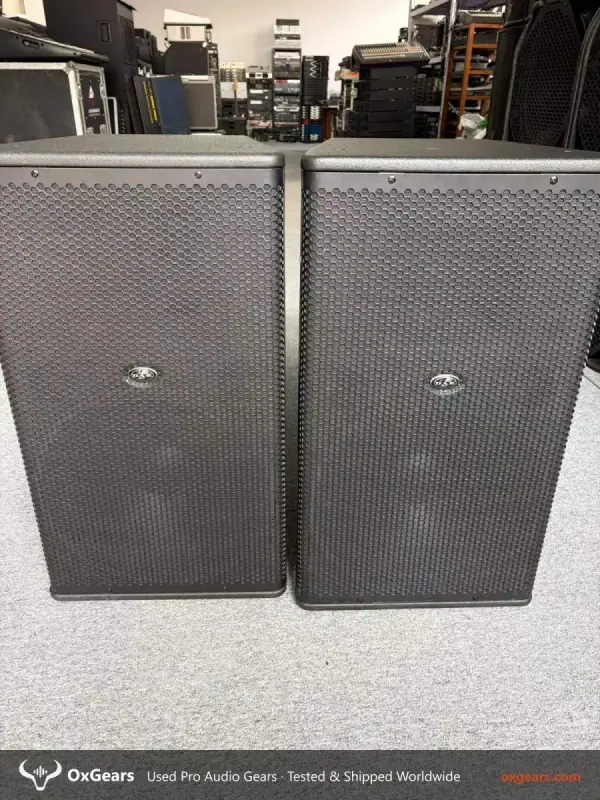
The Meyer Sound MI-12 is a two-way loudspeaker with 90° × 60° coverage, 132 dB max SPL, and 1000 W continuous power handling, listed here in grade A condition. For a buyer considering a used Meyer Sound MI-12 for sale, the key question is whether the unit's actual driver condition and service history match the grade A label, because the listing does not disclose serial history, hours, or test results. This guide sets out what the data says, what it does not, and what to check before you commit.
Key takeaways
1. The MI-12's 90° × 60° pattern suits wide, short-throw rooms better than long-throw line array work.
2. Grade A describes cosmetic and functional condition at listing time, not driver originality or service records.
3. Critical unknowns include serial history, actual hours, flight-case condition, and quantity available.
4. Ask for driver photos, a recent sweep test, and the serial number before paying for export. If the MI-12's coverage and SPL do not fit your rooms, browse the wider range of second hand pro audio gear and apply the same serial, driver and test-report checks to every unit.
What the listing data says
The listing presents the Meyer Sound MI-12 as a passive two-way speaker with two 1.4-inch compression drivers and one 12-inch woofer. Power handling is 1000 W continuous, frequency range is 65 Hz to 20 kHz, maximum SPL is 132 dB, and nominal impedance is 8 Ω. Coverage is 90° horizontal by 60° vertical, and connections are two Neutrik NL4 speakON ports. The condition grade is A, and the listing states that year of manufacture and quantity available are available on request. Dimensions and weight are listed as unmeasured.
Two implications stand out for export buyers. First, the 90° × 60° coverage is wider than many line array elements, which makes the MI-12 a candidate for front fills, side fills, or main PA in rooms where horizontal spread matters more than throw. Second, the 132 dB max SPL from a single 12-inch woofer suggests the cabinet is intended for medium-level applications, not for high-SPL dance floors or large outdoor stages. The grade A label indicates the unit is in good cosmetic and functional condition according to the seller's grading, but it does not specify whether the drivers are original, re-coned, or replaced.
For buyers comparing options, the used speakers category includes other passive and powered models, but the MI-12's combination of wide coverage and moderate SPL is relatively specific. If you are building a system for a venue with low ceilings and wide seating, this coverage pattern can reduce the number of boxes needed. If you are outfitting a long, narrow room or a space requiring high SPL at distance, the MI-12 is less suitable.
What the datasheet does not tell you
The listing omits several details that matter for a used purchase. Serial history is not disclosed, so you cannot verify the unit's age or whether it has been in rental service, installed in a fixed venue, or used in a touring environment. Service records are not mentioned, which means you do not know if the drivers have been re-coned, if the crossover has been serviced, or if the cabinet has been repaired. Actual hours of use are unknown, and for a speaker with compression drivers, hours can affect diaphragm fatigue.
Flight-case condition is not stated. If the unit ships in a flight case, the case's condition affects transport safety and resale value. If it ships without a case, you need to arrange packaging that protects the drivers and cabinet during export. Quantity available is on request, which is a problem if you need matching pairs or multiples for a system; a single unit may not be enough for your deployment, and mixing vintages can lead to tonal differences.
Dimensions and weight are unmeasured, so you cannot calculate freight costs or check handling requirements without asking. Year of manufacture is on request, which matters because older units may have different driver versions or crossover revisions. Finally, the listing does not include any test data, such as a frequency response sweep or impedance curve, so you cannot confirm that the drivers are within specification. Buyers who want a second cabinet to compare against the MI-12 before committing can check the used JBL EON1500 listing and request the same driver photos and sweep test from the seller.
Who should not choose this
This unit is not for buyers who need a line array for long-throw coverage. The MI-12 is a point-source cabinet with 90° × 60° coverage and 132 dB max SPL; it will not deliver the directional control or SPL at distance that a line array provides. If your venue is a large hall, outdoor stage, or any space where the audience is far from the PA, this cabinet is a bad fit.
It is also not for buyers who require documented service history and full technical specifications before purchase. The listing does not disclose serial history, service records, or test results, and the dimensions and weight are unmeasured. If your procurement process requires those details upfront, this unit will not pass without additional information from the seller.
Finally, it is not for buyers who need multiple matching units immediately. Quantity available is on request, and if only one unit is available, it may not suit a system integration that requires pairs or arrays.
Trade-offs to weigh
The grade A label is a trade-off: it suggests the unit is in good condition, but it does not replace a technical inspection. For a used speaker, cosmetic grade and driver condition are separate; a cabinet can look clean but have tired diaphragms or a replaced woofer. The listing's spec combination (1000 W continuous, 132 dB max SPL, 8 Ω) implies the MI-12 is efficient enough for medium-sized rooms but not for high-SPL applications. That may be fine for a corporate AV rental or a house of worship, but not for a nightclub main PA.
The wide 90° horizontal coverage is a trade-off between coverage and gain before feedback in live microphone applications. In a venue with many open microphones, a wide pattern can increase feedback risk compared to a narrower cabinet. The 65 Hz lower limit means the MI-12 will not reproduce sub-bass content; you will need subwoofers for full-range music playback. That adds cost and complexity to the system.
For export buyers, the lack of dimensions and weight is a practical trade-off: you cannot get a freight quote without asking the seller, which adds a step to your purchasing process. The unknown year of manufacture is another: older units may be harder to service or match with newer inventory. If you are comparing this to a second hand line array speakers option, consider whether the MI-12's coverage and SPL fit your typical rooms; if not, a line array may be more versatile even if it costs more.
Next step before you pay
Before paying, request the following from the seller: the serial number and year of manufacture, high-resolution photos of each driver (front and back), a recent frequency response and impedance sweep for each driver, the quantity available and whether units are matched, the dimensions and weight, and the flight-case condition if included. Also ask whether the drivers are original or have been re-coned, and whether there are any service records.
If you are buying for export, confirm the packaging method and whether the unit will be palletized or crated. Ask for the HS code and any export documentation the seller can provide. For a grade A unit, a short video of the speaker playing at moderate level can help confirm functionality, but it is not a substitute for a sweep test.
To ask for availability and a quote for this specific unit, use the contact page and reference the listing. If you need multiple units, state the quantity and ask for a lead time; the listing does not disclose MOQ or lead time, so those must be confirmed.
FAQ
What is the power handling of the Meyer Sound MI-12?
The listing states 1000 W continuous.
What coverage pattern does the MI-12 have?
90° horizontal by 60° vertical.
Does the listing include dimensions and weight?
No, both are listed as unmeasured.
What is the condition grade?
Grade A.
Is the year of manufacture disclosed?
No, it is available on request.
## Sources
- OxGears listing: Meyer Sound MI-12
- Manufacturer published specifications for Meyer Sound MI-12 (not linked; refer to manufacturer documentation)
Shipping several units or building a full system? Check shipping options with your port and timeline.