Used Line Array Buying Process for Export Buyers
A process guide for overseas distributors, rental companies, and venue buyers on how to evaluate and purchase used line arrays without model-specific data.
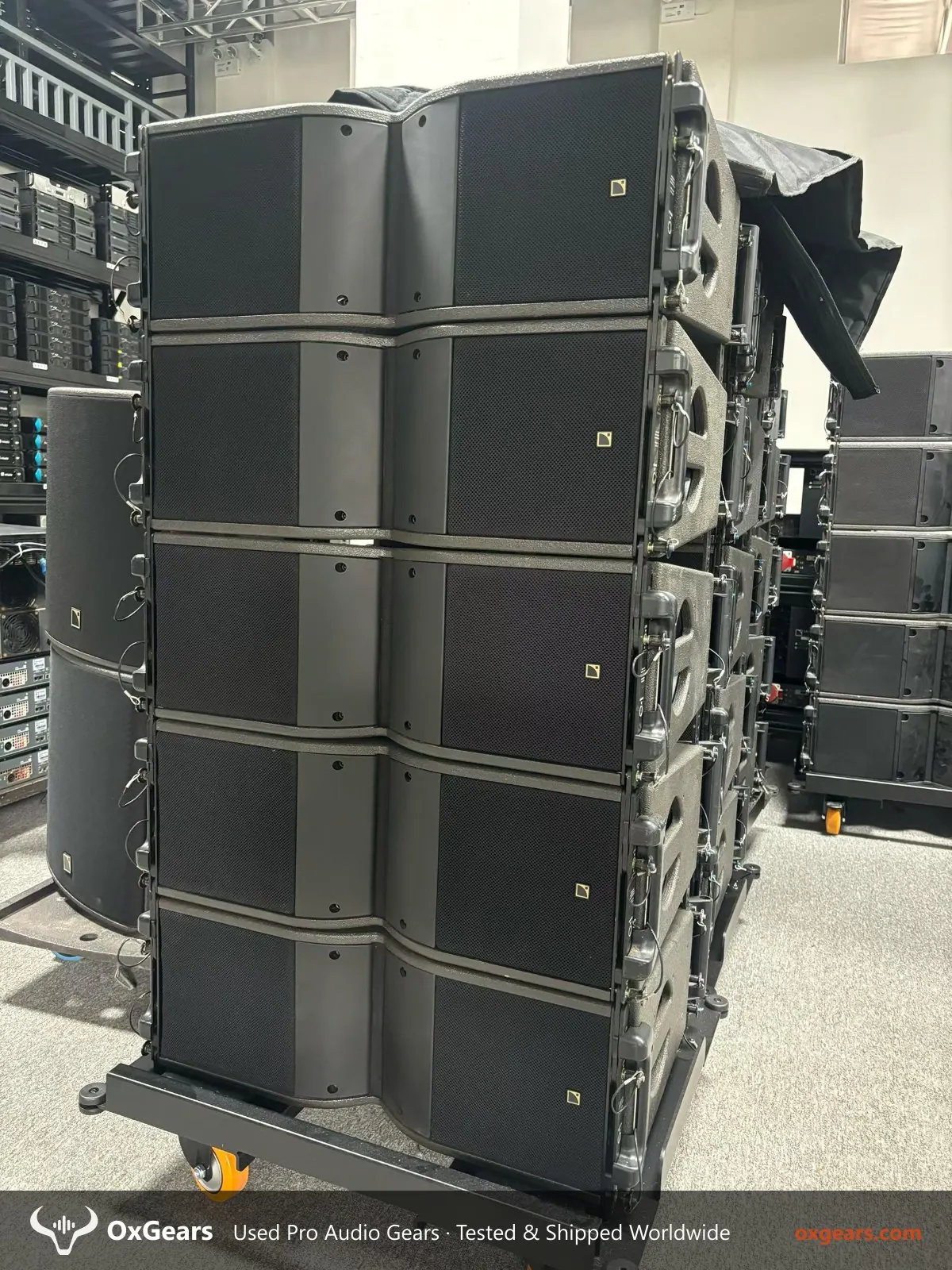
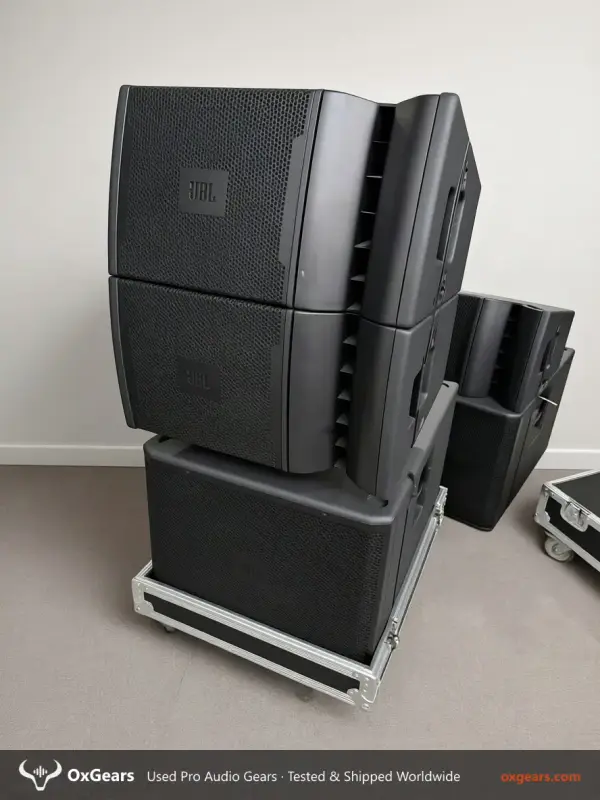
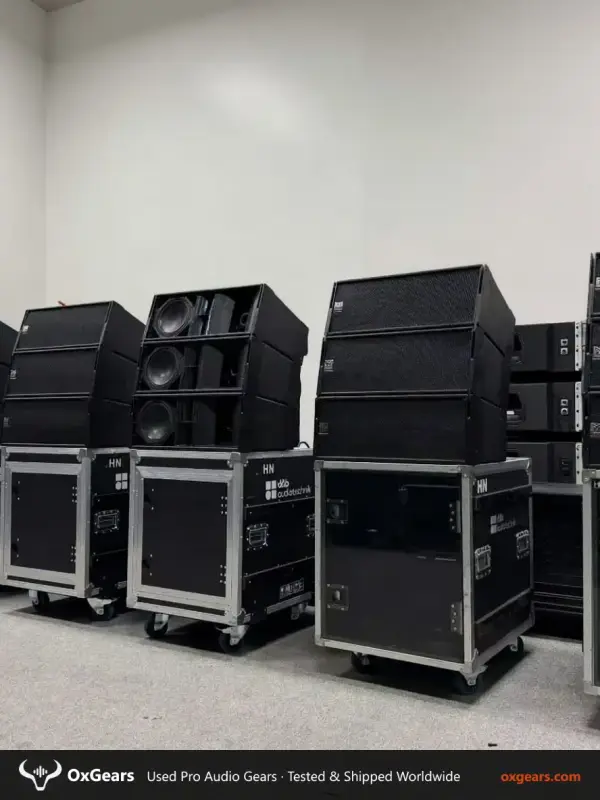
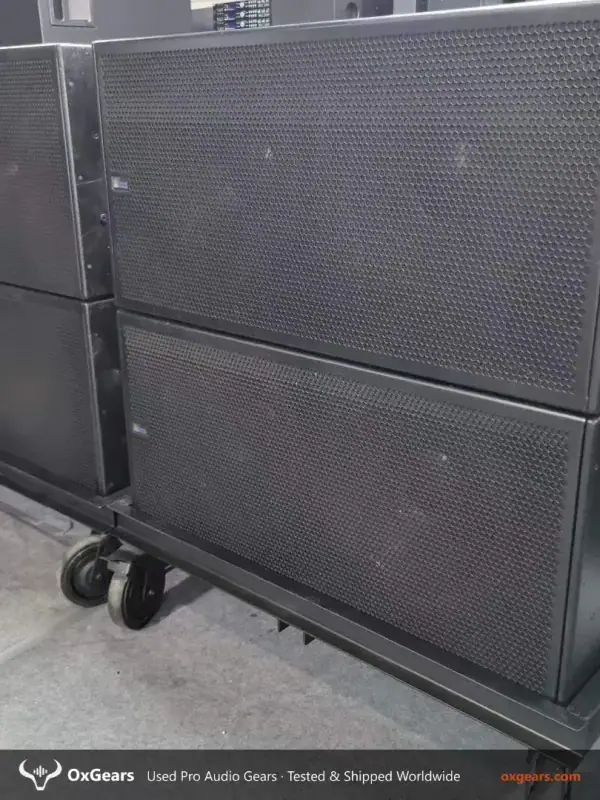
A second hand line array system supplier should be judged on whether it can offer a coherent system — matching cabinets, the rigging frames that belong with them, and the processing that drives them — rather than on a single cabinet price. Ask for the system composition, condition grade per box and what is included in the flight case before you discuss anything else. If the supplier cannot describe the set as a set, you are buying parts, not a system.
1. A line array is only a system when cabinets, rigging and processing match, so price the complete set rather than the box count. 2. Condition grade per cabinet matters more than an average grade for the lot, because one weak box limits the whole hang. 3. Driver history — original, re-coned or replaced — is the single largest unknown on any used cabinet and must be asked for in writing. 4. Inspection and packing terms are the buyer's responsibility to define, and they belong in the enquiry, not in the purchase order.
There is no listing data behind this article. No model-specific figures, prices, grades, warranty terms, lead times or minimum order quantities can be quoted here, and none should be inferred from the text. What can be said is structural: a line array offer from a used pro audio exporter normally consists of a number of identical or matched cabinets, a rigging frame or bumper, possibly a flying grid, and a processing or amplification package that the original system depended on.
For buyers working through the second hand line array speakers range, the useful question is not how many boxes are in the offer but whether the offer is internally consistent. Cabinets from one production series, frames rated for that cabinet, and presets written for that cabinet and that amplifier are what make a hang predictable. A mixed lot of visually similar boxes from different series can look like a bargain and behave like a problem, because the array prediction you rely on for coverage assumes matched elements.
OxGears publishes individual listings such as the NEXO GEOS 1230 and the Meyer Sound MINA line array, and these show the shape of the information a buyer should expect: cabinet identity, physical condition, and what accompanies the unit. Read them as examples of the format, not as a statement of current stock. The used pro audio department holds the wider range, and the full used equipment catalogue is where a buyer should look when the requirement is a complete system rather than a single model.
A manufacturer datasheet describes a new cabinet in a defined condition. It does not describe the cabinet in front of you. Three things sit outside every published specification and decide the real value of a used line array.
First, driver history. A cabinet with original drivers, one with re-coned drivers and one with third-party replacements can share the same model number and behave differently in level, phase and reliability. The datasheet has no field for this. Ask per cabinet, not per lot.
Second, rigging. Frames, pins, shackles and tilt hardware are a separate asset class from the loudspeaker. A system offered without its correct frame cannot be flown as designed, and a frame of uncertain history introduces a safety question that no acoustic specification addresses. Completeness of rigging is Unknown / Not disclosed until the supplier states it.
Third, processing and amplification. Many line array systems assume specific presets and specific amplifier platforms. If the processing is not part of the offer, the buyer inherits a tuning problem. Whether presets, amplifier channels or a system processor accompany a given offer is Unknown / Not disclosed and must be confirmed in writing.
Do not choose a second hand line array system if you need a fixed published price before you enquire. Used pro audio is priced per offer, and any supplier quoting a stable list price for a used system is either describing new stock or guessing. Prices, warranty periods, lead times and minimum order quantities are Unknown / Not disclosed here and should be expected to vary by offer.
Do not choose this if you cannot inspect, or cannot appoint someone to inspect on your behalf. A line array is a multi-box purchase where one failed driver or one bent frame changes the economics of the whole hang, and remote buying without an inspection step transfers that risk entirely to you.
Do not choose a line array at all if your work is small corporate events, conference audio or playback in a single room. A point-source full-range cabinet and a subwoofer will cover those rooms with less rigging, less processing and less labour. Line arrays earn their cost on throw distance and coverage consistency, not on prestige.
And do not choose a mixed lot assembled from different series simply because the cabinet count looks attractive. If the supplier cannot confirm that the boxes belong together as a system, treat the offer as a spare-parts purchase and price it accordingly.
System completeness against unit price. A complete matched set with frames and processing costs more per box than loose cabinets, and it is usually the cheaper purchase once deployment is counted, because the loose boxes need frames, presets and matching before they can be flown.
Condition grade against quantity. A smaller number of higher-grade cabinets will often outperform a larger number of mixed-grade boxes, since the array is limited by its weakest element and by the consistency between elements. Ask for the grade per cabinet, not a lot average.
Brand ecosystem against independence. Systems that depend on a specific processing platform are predictable when the platform is included and awkward when it is not. If the offer excludes the processing, budget for either sourcing it separately or re-tuning on a different platform, and treat that as a real cost.
Inspection cost against risk. Paying for a third-party inspection and for proper export packing adds cost before shipping, but it is the only mechanism that converts Unknown / Not disclosed condition into a documented fact. For a multi-cabinet order, that trade is normally worth taking.
Freight and packing against schedule. Line array cabinets are bulky and heavy relative to their value, so packing method and freight terms affect the landed cost as much as the purchase price. Shipping terms for any specific offer are Not disclosed until quoted.
Write the requirement as a system specification, not a model request. State the number of cabinets, whether a frame or bumper is required, whether processing and amplification must be included, the intended venue size and throw, and the destination port. Send it through the availability and quote request so the reply can be matched to a real offer rather than a generic list.
Then ask four questions in writing. What is the condition grade of each cabinet? What is the driver history of each cabinet? What rigging hardware is included, and is it the correct hardware for these cabinets? What is included in the processing and amplification package? Any question that comes back vague is a question that has not been answered.
Before payment, agree the inspection method and the packing standard. Confirm who inspects, at what point, and what happens if the inspection finds a fault. Confirm how the cabinets will be packed for sea freight and who bears the risk at each stage. Confirm the commercial term you are buying on, since FOB and other terms place different obligations on each side.
Only after those points are settled does the price mean anything. A quote without a system description, a grade per cabinet and a packing standard is a number, not an offer.
Prices are quoted per offer and are not published. Send the system specification — cabinet count, rigging requirement, processing requirement and destination port — through the contact page and the reply will be based on what is actually available.
Warranty terms are Unknown / Not disclosed and are not stated in advance. Any warranty position must be confirmed in writing for the specific offer before payment.
MOQ is Unknown / Not disclosed. Line array enquiries are usually handled as system requirements rather than fixed unit minimums, so state the full system you need.
Ask for the condition grade per cabinet and the driver history per cabinet in writing, and agree an inspection method before payment. Grades and driver history for any specific unit are Unknown / Not disclosed until the supplier states them.
It depends on the offer and is Unknown / Not disclosed in advance. Confirm in writing whether the correct frame or bumper, and the processing and amplification package, are part of the set. ## Sources
OxGears line arrays: /pro-audio/line-arrays/
OxGears pro audio department: /pro-audio/
NEXO GEOS 1230 listing: /products/nexo-geos-1230/
Meyer Sound MINA listing: /products/meyer-sound-mina-line-array/
Meyer Sound LEMur listing: /products/meyer-sound-lemur/
OxGears full used equipment catalogue: /products/
OxGears contact: /contact/
Manufacturer published specifications for NEXO GEOS 1230, Meyer Sound MINA and Meyer Sound LEMur, where available.
A process guide for overseas distributors, rental companies, and venue buyers on how to evaluate and purchase used line arrays without model-specific data.
Grade A used JBL VRX932LAP line array: specs, what the listing doesn't say, who should avoid it, and what to check before paying.
A focused buying guide for the used Martin Audio W8LM line array element, covering specs, condition grading, deployment constraints and pre-purchase checks for B2B buyers.