Quick answer
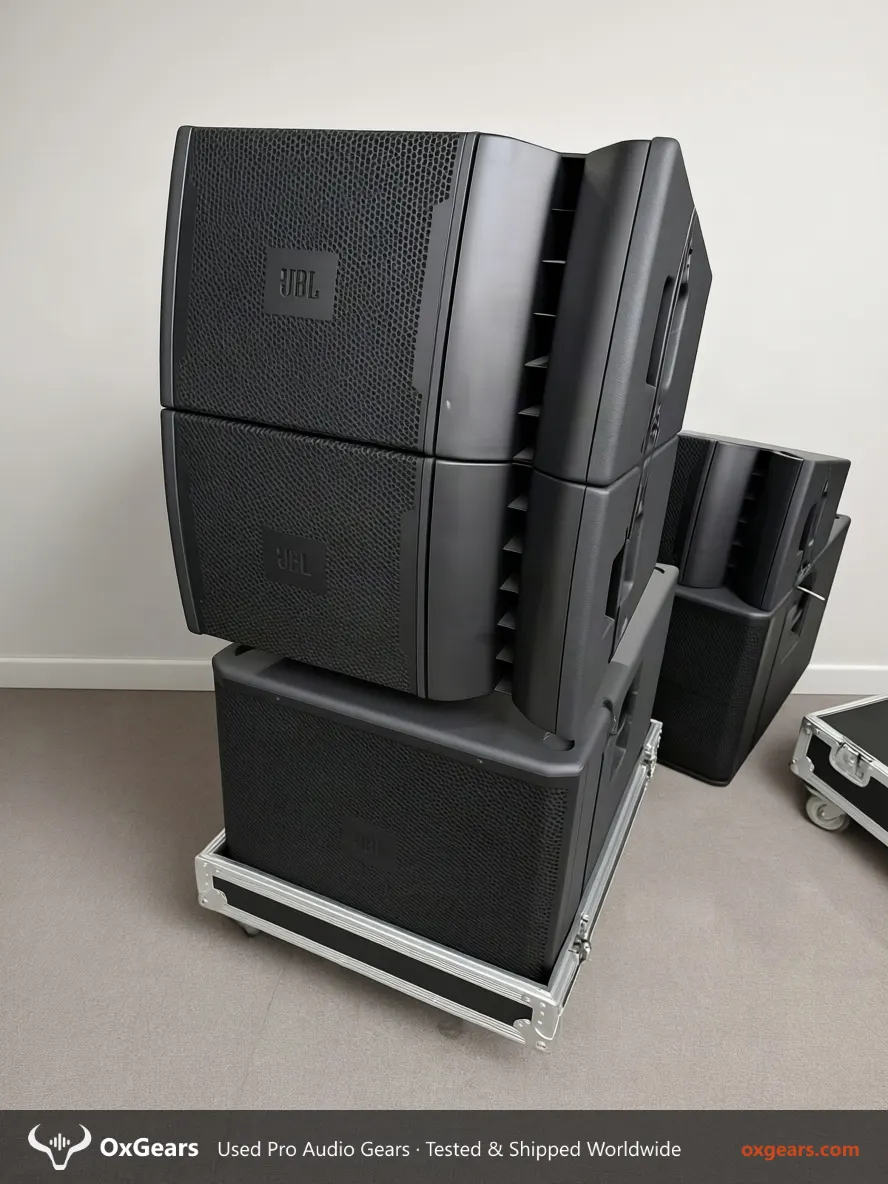
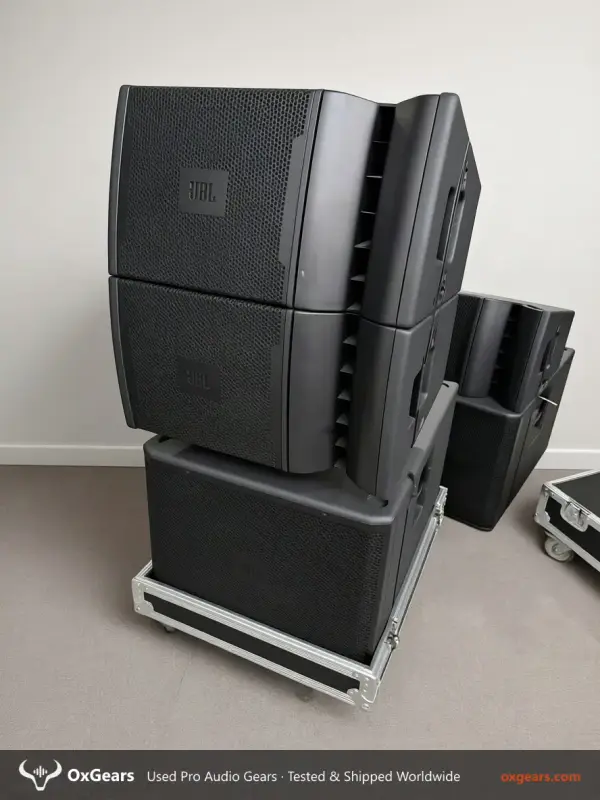
The used JBL VRX932LAP listed in Grade A condition is a powered line array cabinet with 2x 12" LF and 1x 1.5" HF drivers, 1000W AES power handling, and 100° x 10° coverage. It is worth considering if you need high SPL (134 dB max) for wide, shallow rooms and can verify the condition of the drivers, rigging, and amplifier module before paying. Ask for availability and a quote for this specific unit through the JBL VRX932LAP listing.
Key takeaways
1. The VRX932LAP is a powered line array cabinet with 1000W AES and 134 dB max SPL, suited to wide horizontal coverage in medium-to-large venues.
2. Grade A means the unit is cosmetically and functionally in good condition, but it does not guarantee original drivers or service history.
3. The 38.6 kg weight and integrated rigging points require proper flying hardware and structural checks for flown deployment.
4. Before paying, confirm driver originality, amplifier module health, rigging integrity, and ask for test results or a video of the unit in operation.
What the listing data says
The listing presents a JBL VRX932LAP in Grade A condition, part of the line-arrays category on OxGears. The published specifications include 2x 12" LF drivers and 1x 1.5" HF driver, 1000W AES power, 100° H x 10° V coverage, 55 Hz – 20 kHz frequency range, 134 dB max SPL, 8 Ω impedance, integrated rigging points, dimensions of 762 x 457 x 457 mm, and weight of 38.6 kg. Year of manufacture and quantity available are listed as "On request."
Two implications stand out for B2B buyers. First, the 100° horizontal coverage is wider than many line array cabinets, which can reduce the number of boxes needed to cover a wide room but increases the risk of excessive overlap and comb filtering if the array is not designed with proper splay angles. Second, the 10° vertical pattern is relatively narrow, so the cabinet is best used in arrays of several units to achieve even vertical coverage; a single box will not cover a deep room evenly.
The 38.6 kg weight is moderate for a powered line array cabinet, but it still requires appropriate flying hardware and a structural assessment for overhead deployment. The integrated rigging points are a convenience, but their condition must be verified. Grade A suggests the unit has been inspected and is in good working order, but it does not replace a detailed service history or driver verification. For a broader view of how grades are assigned, see how used professional audio is graded. Exporters and rental houses sourcing several boxes at once often browse the full range of used pro audio equipment to match cabinets, rigging and amplifier modules from one supplier.
What the datasheet does not tell you
The datasheet and listing leave several critical points unknown. The year of manufacture is not disclosed, which matters because older units may have drivers that have been re-coned or replaced with non-original parts. The service history is not provided, so you cannot know if the amplifier module has been repaired or if the drivers are original. The actual hours of use are unknown, which affects the remaining life of the drivers and the amplifier. The condition of the flight case, if included, is not described. The quantity available is "On request," so you cannot plan a multi-unit array without asking. Most importantly, there are no test results, frequency response plots, or SPL measurements to confirm the unit meets the published specifications. For a checklist of what to verify, refer to the used line array buying checklist.
These gaps matter because a Grade A cosmetic rating does not guarantee that the drivers are original or that the amplifier module is free from faults. Without service records, you are relying on the seller's inspection, which may be limited to a power-on test. For export buyers, the cost of shipping a faulty unit back is high, so it is worth requesting a video of the unit playing at high volume and a close-up of the driver cones and rigging points.
Who should not choose this
This unit is not for buyers who need a lightweight, compact line array for quick deployment in small clubs or corporate events. The 38.6 kg weight and the need for flying hardware make it less suitable for solo setup by one person. It is also not for venues with low ceiling height or limited rigging capacity, as the cabinet requires proper structural support when flown. If you need a full service history and a warranty, this listing does not provide either; you should look for units with documented service records. Finally, if you need a single cabinet to cover a deep room evenly, the 10° vertical pattern means one box will not suffice; you need an array of several units.
Trade-offs to weigh
The wide 100° horizontal coverage is a trade-off: it can cover a wide audience area with fewer boxes, but it also means more sound spills onto side walls, which can increase reflections in reverberant rooms. The 10° vertical pattern requires careful array design; if you splay the boxes too much, you get gaps; too little, and you get excessive overlap. The 1000W AES power handling and 134 dB max SPL suggest high output, but the actual performance depends on the amplifier module's condition. A re-coned driver might measure differently from an original, so ask for impedance and frequency response checks if possible. The integrated rigging points are convenient but must be inspected for wear or deformation. Grade A condition reduces cosmetic risk but does not eliminate functional risk. For more on re-coned drivers, see what a re-coned driver means.
Next step before you pay
Before paying, request the following from the seller: high-resolution photos of the drivers (front and back), the amplifier module, and the rigging points; a video of the unit playing at high volume; the year of manufacture and any service records; and confirmation of the quantity available. Ask for a quote and availability through the contact page or directly on the JBL VRX932LAP listing. If you are buying multiple units, ask for a test of all units together to check for matching performance. For shipping and paperwork considerations, see shipping used audio equipment. Buyers who need a second cabinet to build a multi-unit array should also compare the used NEXO GEO S1230 against this JBL box before committing to a single brand.
FAQ
What is the power handling of the JBL VRX932LAP?
The listing states 1000W AES.
What is the coverage pattern?
100° horizontal by 10° vertical.
What is the weight of the unit?
38.6 kg.
Is the year of manufacture known?
The listing says "On request."
How many units are available?
The listing says "On request."
## Sources
- OxGears listing for JBL VRX932LAP: /products/jbl-vrx932lap/
- Manufacturer published specifications for JBL VRX932LAP (no URL provided)
Q: What is the power handling of the JBL VRX932LAP?
A: The listing states 1000W AES.
Q: What is the coverage pattern?
A: 100° horizontal by 10° vertical.
Q: What is the weight of the unit?
A: 38.6 kg.
Q: Is the year of manufacture known?
A: The listing says "On request."
Q: How many units are available?
A: The listing says "On request." For hotels and event venues planning wide, shallow rooms, a banquet event PA system built around wide-coverage cabinets like this one can reduce the number of boxes needed per room.
Shipping several units or building a full system? Check shipping options with your port and timeline.