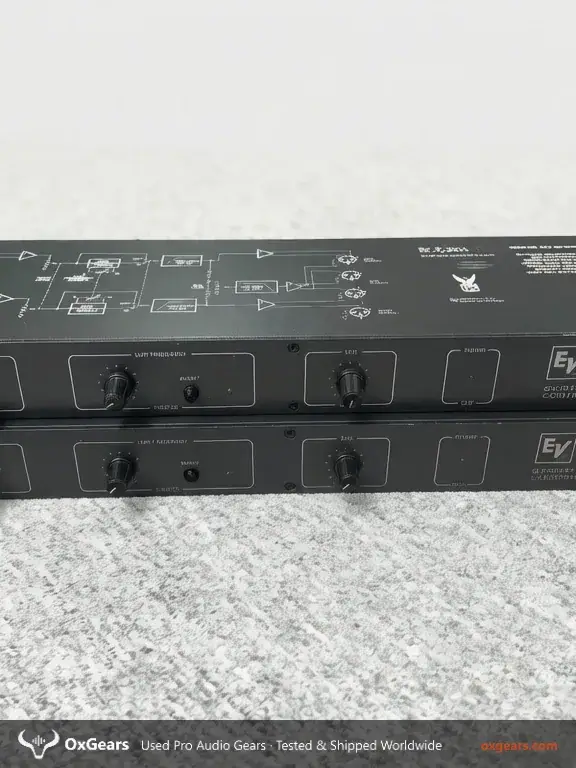
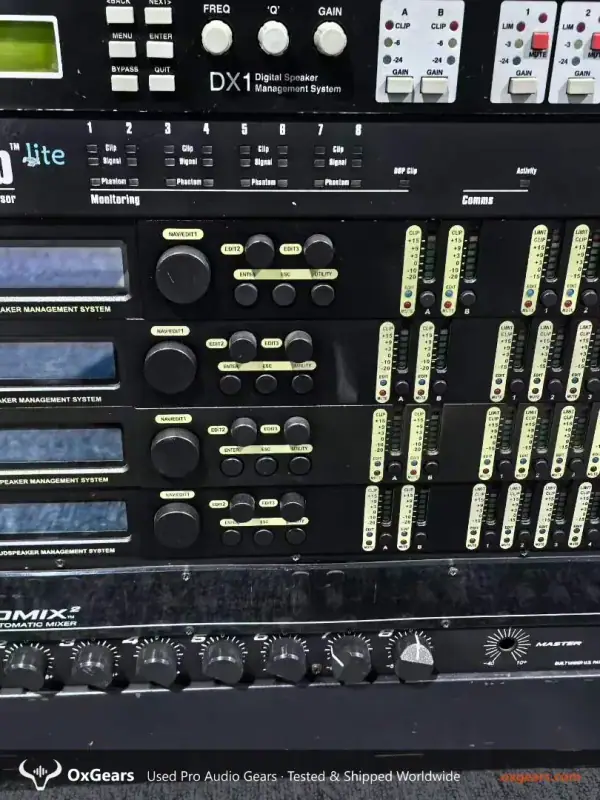
The used EV VXXA is a 2-channel amplifier with onboard DSP, rated 1000 W at 4Ω, in 1U at 3.6 kg, and the unit in this listing is graded A with testing stated. For a B2B buyer the decision comes down to three checks: what the test actually covered, whether the DSP software and its settings come with the unit, and whether a 2-channel 1U amplifier matches the rack you are building. Everything else in this guide is detail around those three points.
Quick answer
The EV VXXA in this listing is a light, universal-voltage 2-channel amplifier with onboard DSP, front-panel control and DSP software, offered in Grade A condition with testing stated and two units available. It suits rental and install buyers who need a compact amp with local DSP control and who will verify software handover and test evidence before paying. It is not the right pick if you need network control, more than two channels, or documented warranty terms.
Key takeaways
1. The listing gives 1000 W at 4Ω per channel pair, 2 x XLR in and 2 x XLR out, DSP yes, 1U, 3.6 kg, 100–240 V AC, tested, quantity two.
2. Network is listed as N/A, so plan on front-panel knobs and DSP software rather than remote monitoring.
3. Grade A with testing stated reduces repair risk but does not replace a documented test report or a software handover.
4. Price, warranty, lead time and MOQ are not in the materials, so those must be requested directly through OxGears contact.
What the listing data says
The listing describes an amplifiers-dsp item: EV VXXA, condition grade A, quantity available two. The stated specifications are 2 channels, 1000 W at 4Ω, DSP present, 2 x XLR inputs and 2 x XLR outputs, network N/A, control by front panel knobs plus DSP software, 1U rack units, 3.6 kg, 100–240 V AC, and tested yes.
Read together, those values describe a compact amplifier intended to sit in a small rack and handle its own processing. The 1U height and 3.6 kg weight matter for export buyers because they change packing density and freight cost per unit compared with heavier multi-channel amps. The 100–240 V AC input matters for distributors serving several regions, because one stock line can be quoted into different mains environments without a voltage-specific variant being named in the listing.
The 2 x XLR in and 2 x XLR out combination, with DSP on board, means the unit can sit between a console and loudspeakers and carry its own processing rather than depending on a separate outboard processor. Buyers comparing this with a passive amp plus separate DSP should note that the VXXA folds both into one 1U space.
Grade A is a condition statement, not a performance guarantee. For context on how OxGears applies grades, see how used professional audio is graded and treat the grade as a starting filter, not the end of inspection.
What the datasheet does not tell you
Several things a buyer needs are simply not in the materials. There is no serial number, no manufacturing date and no firmware or DSP software version. That matters because the DSP software is part of how you configure the unit; if the version on the unit is old, or if the software is licensed rather than freely downloadable, the handover becomes a negotiation point rather than an assumption.
The listing says tested yes but does not say what was tested, at what load, for how long, or whether a written result exists. For a Grade A amplifier that is the difference between a claim and evidence. Ask for the test scope in writing.
Network is listed as N/A. That is a hard constraint, not a footnote: any workflow that assumes remote amp monitoring, remote gain changes or networked presets will not run on this unit. Control is front panel knobs plus DSP software, so someone has to be physically at the rack or connected locally.
Cosmetic detail is not itemised. On a 1U amplifier the parts that wear are the rack ears, the knob shafts, the XLR connector shells and the rear mains inlet. None of that is described.
Finally, price, warranty, lead time and MOQ are absent. Do not assume any of them. Where a value is not stated, treat it as unknown and ask.
Who should not choose this
Do not choose this unit if your deployment depends on networked control and remote monitoring. Network is N/A, so a system integrator designing a venue with central amp supervision would be building around a capability the unit does not list.
Do not choose this if you need more than two channels in one box. Two channels is the stated channel count, and stacking 1U units to reach higher counts changes rack space, cabling and mains distribution in ways a multi-channel amplifier avoids.
Do not choose this if you need subwoofer-scale power. The listing states 1000 W at 4Ω without stating the load per channel or the bridged rating, so anyone sizing for heavy subwoofer duty should not read more into the figure than is written.
Do not choose this if you require contractual warranty cover or a stated lead time. Neither appears in the materials, so a buyer whose tender requires either should look elsewhere or negotiate terms explicitly before committing.
And do not choose it as a like-for-like replacement for a networked DSP amplifier platform already installed across a venue, because the control model differs.
Trade-offs to weigh
The main trade-off is integration convenience against control depth. Onboard DSP with front panel knobs and DSP software means fewer boxes and fewer failure points in a small rack, and it means a rental company can hand a rack to a venue without also handing over a separate processor. The cost is that control is local: no network, so no remote recall, no central monitoring and no logging. For buyers weighing this compact amp against a full install, it helps to compare the rack plan with a worship PA system layout before committing to two-channel units.
The second trade-off is weight and rack space against channel count. At 1U and 3.6 kg the unit is easy to ship and easy to rack, which helps distributors holding stock for multiple markets and helps rental companies building travel racks. But two channels per 1U means a four-channel requirement becomes two units, two mains inlets and twice the rack hardware.
The third trade-off is the universal mains input against unknown regional history. A 100–240 V AC input is convenient for export, but a used unit's history across voltages is not disclosed, so a buyer should ask how it was previously deployed rather than assume it only ever ran on one mains standard.
The fourth trade-off is grade against evidence. Grade A plus tested yes is a good starting position for a used amplifier, and it is stronger than an untested listing. It is still not a substitute for a written test scope, a software handover and a photo set of the actual unit. Buyers who need a documented inspection trail should build that into the purchase conversation rather than assume the grade covers it.
For buyers assembling a mixed rack, it is worth comparing this against other amplifier and DSP options in the used pro audio equipment range before fixing the rack plan. Buyers who want a second reference point on test evidence and software handover should read this used Powersoft T304 buying guide alongside the checks above.
Next step before you pay
Ask OxGears for availability and a quote on the two units, and put the following questions in the same message so the answer is usable: what the test covered and whether a written result can be shared; which DSP software version is installed and how the software and any presets are handed over; whether the front panel knobs and XLR connectors are intact with photos of the actual units; and what the price, warranty position, lead time and shipping terms are, since none of these appear in the listing.
If you are buying for a specific project, state the intended loudspeaker load and the rack plan, so the 1000 W at 4Ω figure can be matched against your requirement rather than read in isolation. If you are a distributor stocking for several regions, confirm the mains history and ask for the packing dimensions, because 1U and 3.6 kg make freight planning straightforward only once carton size is known.
Use the EV VXXA reference when you write, and send the enquiry through OxGears contact so availability and terms come back in one thread. Treat any figure not confirmed in writing as unknown.
FAQ
How many EV VXXA units are available in this listing?
The listing states quantity available: 2.
Does the EV VXXA have network control?
No. Network is listed as N/A; control is via front panel knobs and DSP software.
What power does the listed EV VXXA state?
1000 W at 4Ω, with 2 channels, 2 x XLR in and 2 x XLR out.
What condition grade is this unit?
Grade A, and the listing states tested: yes. The test scope itself is not disclosed.
What is the price, warranty and lead time?
Not disclosed in the materials. Request them directly from OxGears before committing.
## Sources
EV VXXA product page: /products/ev-vxxa-system-controller/
OxGears product catalogue: /products/
OxGears contact: /contact/
Manufacturer published specifications for EV VXXA (no verifiable link supplied).
Need condition photos or test results before you commit? Contact our team and we reply within one working day.