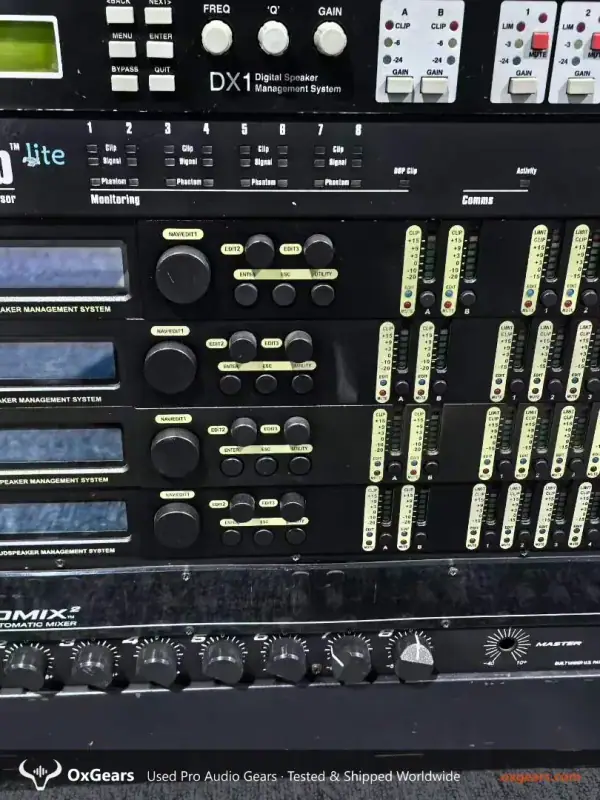
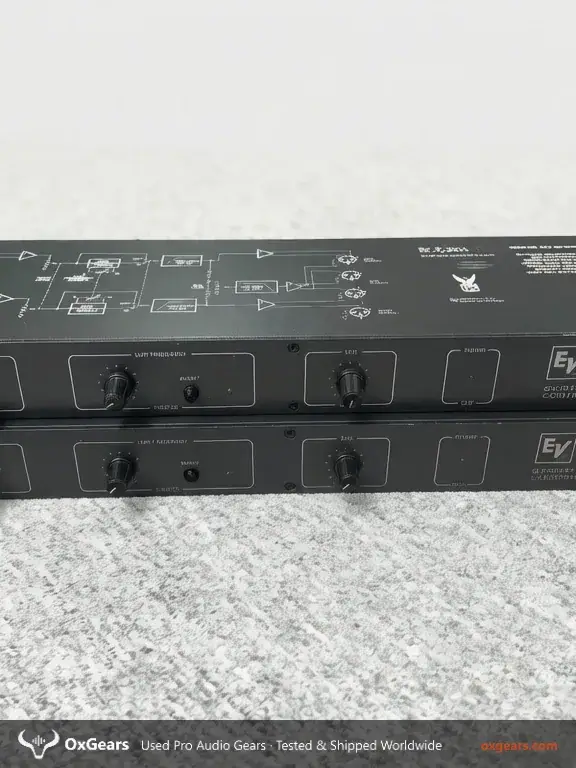
The used Crest Audio Pro 8200 on OxGears is a grade A, two-channel power amplifier rated 2000 W @ 4Ω per channel, in a 2U chassis weighing 12.7 kg, with 2× XLR in, 2× XLR out and 2× speakON out, front panel knobs and switches, 100–240 V AC, and no DSP or network control. It is listed as tested, with quantity available on request. For a B2B buyer the decision comes down to whether a plain, high-power two-channel amplifier fits your rack and whether the undisclosed service history is acceptable.
Quick answer
This is a tested, grade A, two-channel amplifier at 2000 W @ 4Ω per channel with XLR and speakON connectivity and no onboard DSP or network control. It suits buyers who already run external processing and simply need clean power amplification in 2U. Before paying, confirm serial history, service records and what "tested" covered, because none of that is published on the listing.
Key takeaways
1. The Pro 8200 is a two-channel, 2000 W @ 4Ω per channel amplifier in 2U at 12.7 kg, with XLR in/out and speakON out.
2. There is no DSP and no network control, so all processing and limiting must come from outboard gear.
3. Grade A describes the unit's grading tier, not its service history, hours or flight-case condition, which are not disclosed.
4. Quantity is on request, so confirm stock depth before you build it into a quote or a project schedule. For fixed installs in churches, the same two-channel approach can be planned as part of a complete worship PA system, where external processing is already part of the rack design.
What the listing data says
The published specification set is short and specific: two channels, 2000 W @ 4Ω per channel, DSP marked N/A, network marked N/A, control via front panel knobs and switches, 2U rack height, 12.7 kg, 100–240 V AC, tested. Inputs and outputs are 2× XLR in, 2× XLR out and 2× speakON out. Condition grade is A. Quantity available is on request.
Two things follow from that combination that a generic product page will not spell out. First, the presence of XLR throughput alongside XLR inputs means the amplifier can be daisy-chained in a signal run without a separate splitter, which matters in rental racks where one feed is distributed across several amplifier positions. Second, the absence of DSP and network control is a deployment constraint, not a minor omission: any loudspeaker management, limiting, EQ or delay has to live in a separate processor in the same rack, which adds rack units, cabling and a second failure point. Buyers who assume the amplifier can be dropped in alone will be short of processing.
The 100–240 V AC input range is relevant for export orders across the Middle East, Southeast Asia, Africa, Europe and South America, where mains voltages differ. It reduces the risk of a voltage mismatch, but it does not remove the need to confirm the plug type and any voltage selection method on the rear panel before shipping.
Grade A is a grading tier. It tells you the unit sits in the top band of the site's condition scale, which is explained in how used professional audio is graded A, B and C. It does not tell you the unit's age, how many hours it has run, whether it has been serviced, or whether it has ever been repaired. Those are separate questions and they are not answered on the listing.
What the datasheet does not tell you
The listing gives power, channels, I/O, rack units, weight and voltage. It does not give serial history, service records, actual hours of use, or the details of what the test covered. "Tested: Yes" is a statement that testing happened, not a published test report with measured output per channel, distortion figures or thermal behaviour under load.
Also unknown: whether the unit ships in a flight case, original packaging or neither; the cosmetic detail behind the grade A label; whether the front panel knobs and switches have been checked for noise or wear; and whether the speakON connectors have been inspected for damage. Quantity available is on request, so stock depth is not disclosed either. Buyers who want onboard processing instead of outboard gear can compare this unit against the Adamson PLM 20K44 listed on the site, then decide which rack layout suits their project.
Why this matters for the decision: a power amplifier is a wear item. Output devices, capacitors and fans age, and the cost of a repair can be a meaningful share of the purchase price on a used unit. Without service records you cannot tell whether you are buying a lightly used amplifier or one that has run hard in a rental fleet. Without a test report you cannot tell whether 2000 W @ 4Ω per channel is being delivered on both channels today. These gaps do not make the unit a bad buy, but they shift the burden onto your pre-payment checks.
Who should not choose this
Do not choose this unit if your rack design depends on onboard DSP, presets, limiting or network monitoring. The listing marks DSP as N/A and network as N/A, so there is nothing to configure and nothing to monitor remotely. A venue or integrator who expects to log into an amplifier platform and read status per channel will be disappointed, and a rental company standardising on networked amplification will find this unit does not fit that standard.
It is also a poor fit for a room where rack space and cabling are already tight and adding a separate loudspeaker processor is not practical. And it is a bad choice for any buyer who cannot obtain serial history or service records before paying, because the listing does not supply them and the amplifier's condition beyond grade A is not documented.
Where it does fit: a rack that already contains external processing, a two-channel role driving a pair of cabinets, or a backup/spare position where a simple, high-power amplifier with XLR and speakON is what is needed. Buyers comparing options across the range can review other used amplifiers and DSP units on the site.
Trade-offs to weigh
Power versus processing. 2000 W @ 4Ω per channel in 2U and 12.7 kg is a lot of output for the rack space, but every bit of processing has to come from elsewhere. Weigh the cost and rack space of an external processor against the price of the amplifier itself.
Simplicity versus monitoring. Front panel knobs and switches mean no software, no firmware and no network configuration — an advantage in the field where a rental tech needs to make an adjustment fast. The trade-off is no remote visibility: you cannot see from front of house whether a channel has gone into protection.
Grade A versus documented history. Grade A is the top condition tier, but it is not a service record. The trade-off is between accepting the grading at face value and spending time on verification before payment. For a single unit the verification cost is small relative to the risk.
Voltage flexibility versus plug and configuration detail. The 100–240 V AC range supports export to multiple regions, but the listing does not state the plug type or how voltage is selected. Confirm this before the unit is packed, because it affects what the receiving warehouse can put into service immediately.
Quantity on request versus project planning. Because quantity is not published, you cannot assume multiple units are available for a multi-room install. If you need matched pairs or a fleet, ask early.
Next step before you pay
Ask for availability and a quote for this specific unit through the OxGears contact page, and put the following questions in the same message so the reply is complete: the serial number and approximate age, any service or repair records, what the testing covered and whether both channels were measured, whether a flight case or packaging is included, the plug type and voltage configuration, and how many units are currently available.
Then compare the answers against your rack plan. If you need external processing anyway, confirm you have the rack units and cabling for it. If you are buying for export, confirm the destination voltage and plug standard against what is supplied. If the answers on service history come back thin, treat that as a pricing and risk question rather than an automatic rejection — but do not pay before you have them. Buyers who want to see how other used units are documented can read the used Crest Audio Pro 8200 for sale listing alongside the category page, and buyers sourcing cabinets to pair with it can review second hand line array speakers in the same catalogue.
FAQ
What is the power rating of the used Crest Audio Pro 8200 on this listing?
The listing states 2 channels at 2000 W @ 4Ω per channel.
Does the Crest Audio Pro 8200 have onboard DSP or network control?
No. The listing marks DSP as N/A and network as N/A, with control via front panel knobs and switches.
What connectors does it have?
2× XLR in, 2× XLR out and 2× speakON out.
What condition grade is this unit and is it tested?
The listing gives condition grade A and states the unit is tested. Service records and hours are not disclosed.
How many units are available?
Quantity available is on request, so stock depth is not published.
## Sources
OxGears listing: Crest Audio Pro 8200 — /products/crest-audio-pro-8200/
Manufacturer published specifications for Crest Audio Pro 8200 (no verifiable URL supplied).
Shipping several units or building a full system? Check shipping options with your port and timeline.