LED Display Module
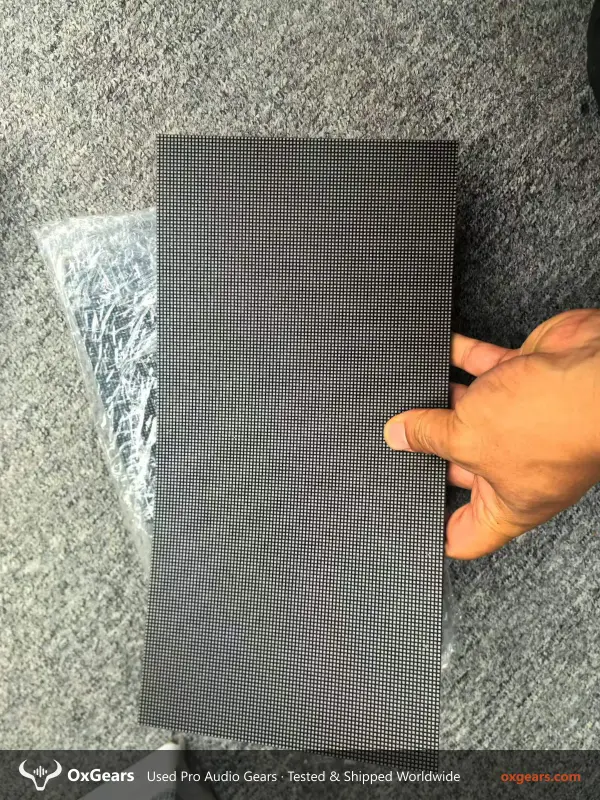
Single full-color LED display module, supports red, green, and blue display, flat surface with no obvious scratches. Suitable for splicing large LED screens, tested and functioning properly.
Grade A — 90%+ new In stock
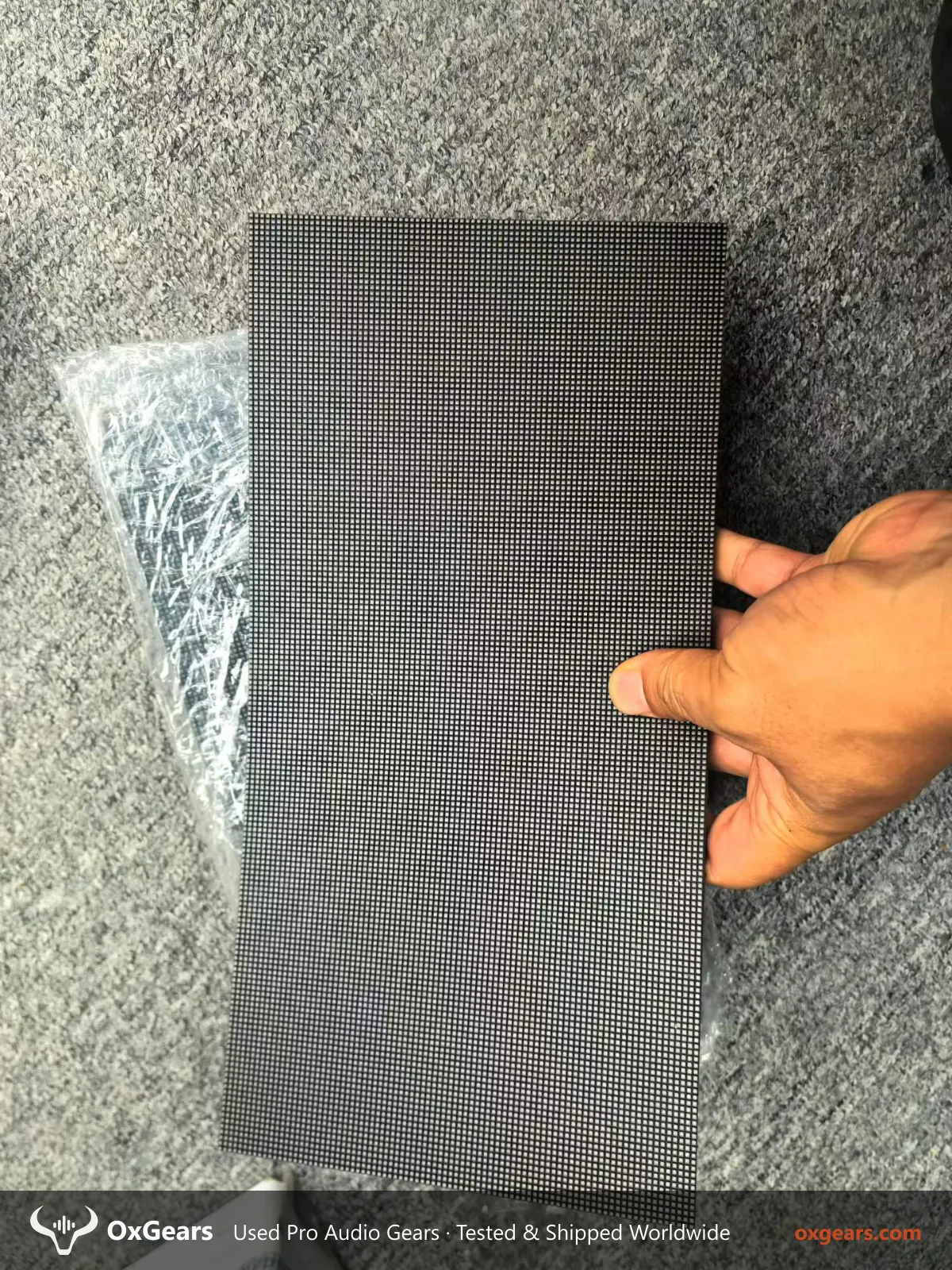
This used LED panel module is a Grade A, 1.86mm pixel pitch unit with 172×86 pixels, 1R1G1B full-colour configuration, and a refresh rate of ≥3840Hz. It is worth considering if you need fine-pitch modules for close-viewing indoor applications and can verify the missing control, network, and brightness details directly with the seller. Ask for availability and a quote for the specific unit through the used LED panel module page.
1. The 1.86mm pixel pitch and 172×86 resolution give a module size of roughly 320×160mm, which is a common fine-pitch format for indoor rental and fixed installs. 2. Pixel density of 288,000–289,000 pixels/㎡ and refresh ≥3840Hz make it suitable for camera-facing stages, but brightness and contrast are not disclosed. 3. Power draw of ~580–980 W/㎡ and 6–6.6A per panel at DC 4.5–5V means you must plan power distribution and heat management carefully. 4. Grade A condition reduces cosmetic risk but does not replace a serial history, service record, or actual hours check before payment.
The listing presents a used LED panel module graded A, with a resolution of 172×86 pixels and a pixel pitch of 1.86mm. That combination implies a physical module size of approximately 320mm by 160mm, a standard building block for fine-pitch indoor screens. The pixel configuration is 1R1G1B full-colour, and the pixel density is stated as 288,000–289,000 pixels/㎡. The refresh rate is ≥3840Hz, which is high enough to avoid visible scan lines on camera for most broadcast and event work. Viewing angles are given as ~140°–160° horizontal and ~140°–170° vertical. Electrical data includes voltage DC 4.5–5V, maximum current 6–6.6A per panel, and power consumption ~580–980 W/㎡.
What this combination implies for a buyer: the fine pitch and high refresh rate point to indoor close-viewing use, such as corporate stages, control rooms, or rental screens where the audience sits within a few metres. The power figure is per square metre, so a wall of several square metres will draw significant current and require proper circuit planning. The module is likely to be driven by a separate receiving card and power supply that are not described in the listing, so you will need to confirm whether those are included or must be sourced separately. For a broader view of available screen options, see the used LED screens category.
Several critical values are marked as on request or simply absent: brightness, contrast, control system, and network protocol. Brightness matters because a 1.86mm indoor module is typically in the 600–1200 nit range, but without a stated figure you cannot judge whether it will be visible under your venue's ambient light. Contrast affects black level and overall image punch. Control and network details determine whether the module will work with your existing sending card and processor, or whether you need to buy a matching control system.
The listing also does not disclose serial numbers, service records, flight-case condition, or actual hours of use. For a used LED module, the number of hours affects LED lifetime and colour shift, and service records tell you whether the module has been repaired or had LEDs replaced. Flight-case condition matters for shipping and storage, especially if you are exporting to the Middle East, Southeast Asia, Africa, Europe, or South America. Without these details, you cannot fully assess risk. The Grade A label suggests the unit is in good cosmetic and functional condition, but it is not a substitute for a test report or a serial history check. For context on how grading works, see used pro audio equipment grading notes.
This module is not for buyers who need a complete, turnkey LED screen with processor, rigging, and power distribution included. It is a module-level product, and the listing does not indicate that receiving cards, power supplies, or mounting hardware are included. If you are a venue owner looking for a plug-and-play screen, this is a bad fit. If module-level sourcing proves too uncertain, compare complete second hand LED screen options in the video display department before committing to a purchase.
It is also not suitable for outdoor or high-ambient-light applications. The brightness is not disclosed, and a 1.86mm pitch module is generally designed for indoor use where viewing distances are short. If you are outfitting an outdoor stage or a sunlit atrium, you should look for a module with a known high brightness rating and a coarser pitch. Similarly, if you are a rental company that needs modules with a known control protocol to match your existing inventory, this unit may not integrate without additional hardware. Buyers who require documented service history or a warranty should not proceed without first obtaining those details from the seller. Buyers assembling a complete fine-pitch wall can pair these modules with a used MTB1600 4K master controller and confirm signal compatibility with the seller before ordering.
The fine pitch of 1.86mm gives high pixel density and smooth images at close range, but it also means more LEDs per square metre, which can increase the cost per square metre and the heat generated. The power draw of ~580–980 W/㎡ is on the higher side for indoor modules, so you will need to ensure your power distribution and cooling can handle it. The refresh rate of ≥3840Hz is a strong point for camera work, but without a stated brightness you cannot confirm whether the module will be bright enough for your stage lighting conditions.
The Grade A condition reduces the risk of cosmetic damage, but it does not tell you the LED bin or colour consistency across modules. If you are building a large wall from multiple used modules, colour matching between modules can be a challenge, and the listing does not state whether these modules come from the same batch. The viewing angle is wide, which is good for audience coverage, but the vertical angle range of ~140°–170° is unusually broad and may indicate a diffuser or lens design that affects contrast. Weigh these factors against the price, which is not disclosed, and the lack of warranty information. For shipping and logistics considerations, refer to second hand line array speakers export notes, which share similar freight concerns.
Before paying, ask the seller for the missing technical details: brightness in nits, contrast ratio, control system and network protocol, and whether receiving cards and power supplies are included. Request the serial numbers and any service records, and ask for a short video of the module powered on showing a test pattern. Confirm the physical dimensions and weight, as these are not stated. Ask about the flight-case or packaging condition for export. Finally, request a quote with Incoterms and lead time, and clarify the payment terms. You can initiate this by contacting the seller through the used LED panel module page or the contact form. Do not rely on the Grade A label alone; the missing data is what determines whether this unit is a good fit for your project.
The listing states a resolution of 172×86 pixels and a pixel pitch of 1.86mm.
No, brightness and contrast are listed as 'on request' and are not disclosed in the listing.
The listing states approximately 580–980 W/㎡, with a maximum current of 6–6.6A per panel at DC 4.5–5V.
No, control and network specifications are marked as 'on request' and are not provided.
The module is graded A according to the listing. ## Sources
- OxGears listing for used LED panel module (no public URL provided) - Manufacturer published specifications for LED panel module (no public URL provided) The same discipline of verifying serial history and service records applies to broadcast gear, as explained in this used Lawo mc²56 buying guide for B2B buyers.
Shipping several units or building a full system? Check shipping options with your port and timeline.
Single full-color LED display module, supports red, green, and blue display, flat surface with no obvious scratches. Suitable for splicing large LED screens, tested and functioning properly.
What distributors and rental companies should check before buying a used MTB1600 4K master controller, from front-panel controls to Grade A condition.
Practical buying guide for the KP4-EF-512 used LED panel: specs, Grade A condition checks, HUB75 control, and export tips for distributors and rental firms.
Navigate the purchase of used line array speakers in Nigeria with our B2B guide. Learn what to check, what data is missing, and how to avoid pitfalls.